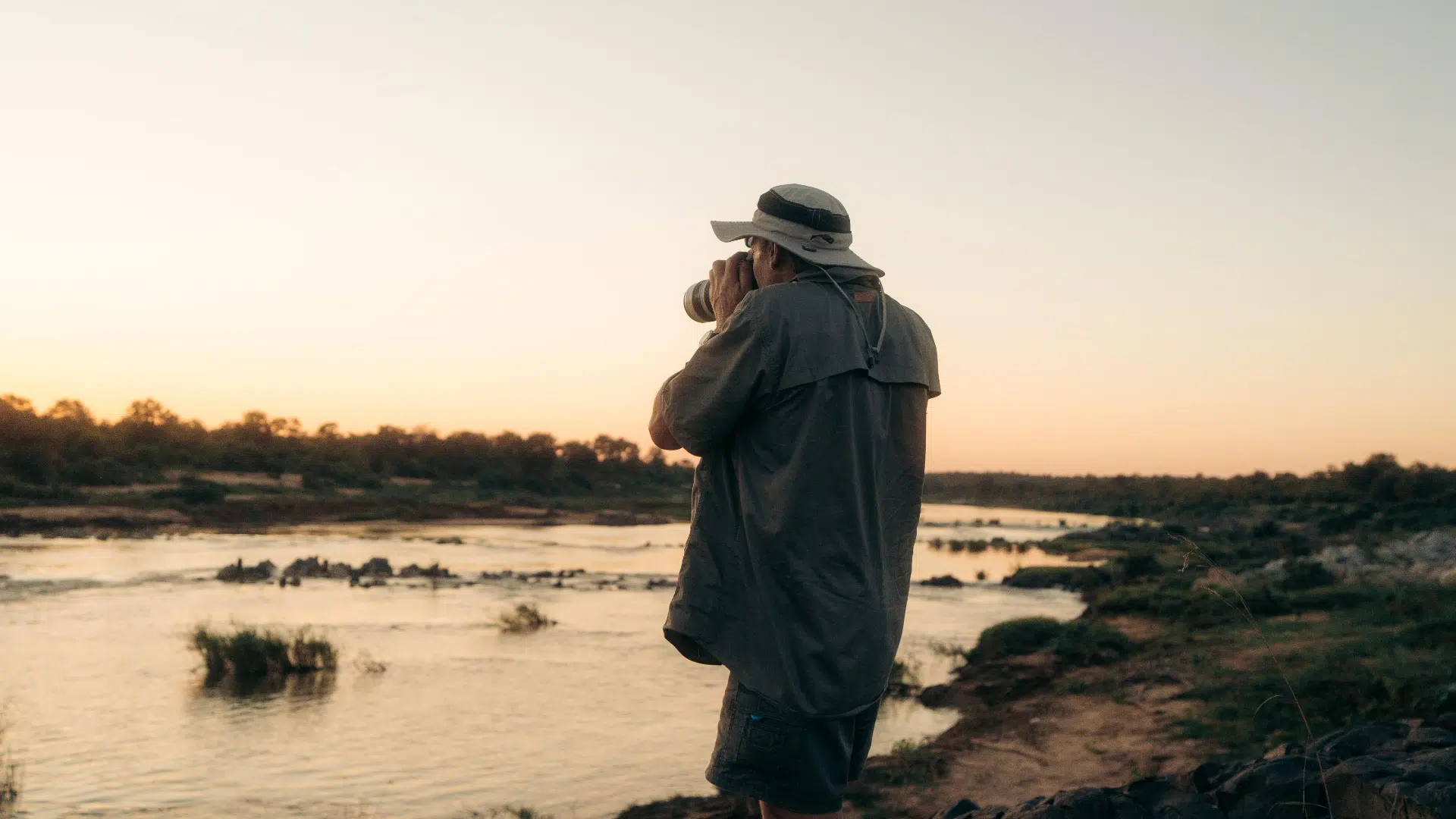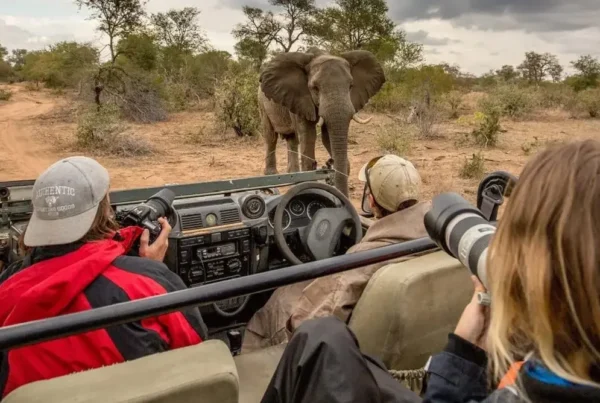

Spend your time in South Africa’s Greater Kruger region developing your wildlife photography skills inside a protected Big 5 reserve. This wildlife photography volunteer project combines structured training with real access to a working conservation area, where your images don’t just capture wildlife, they help document and communicate the realities of protecting it. You’ll head out on regular game drives to photograph African wildlife in natural conditions, learning how to respond to shifting light, animal behaviour, and the pace of the bush. Beyond the technical side (composition, manual settings, editing workflows), you’ll also explore how photography supports conservation messaging, species identification, and reserve management. Whether you’re building a portfolio, sharpening your field skills, or testing the waters of conservation media, this project gives you practical experience that stands out. You’ll leave with stronger images, greater confidence behind the lens, and a clearer understanding of how photography fits into real wildlife conservation work in South Africa.
Wildlife Photography & Conservation in South Africa
VOLUNTEER
CONSERVATION
Visual Storytelling on the Frontlines of Conservation
Project highlights
-
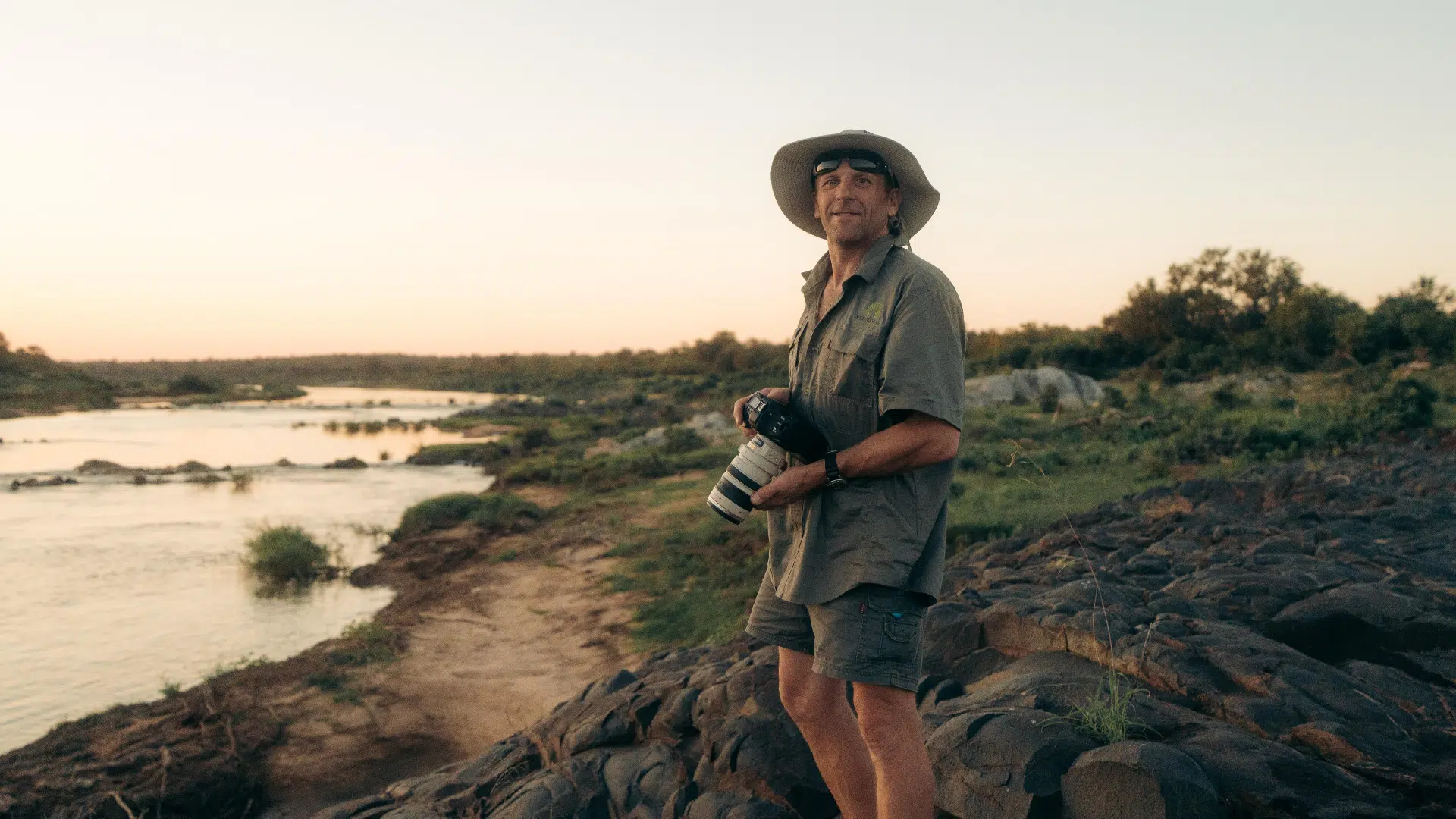
Live the life of a wildlife photographer
Develop your skills while photographing wildlife in natural, non-intrusive settings inside a protected area.
-
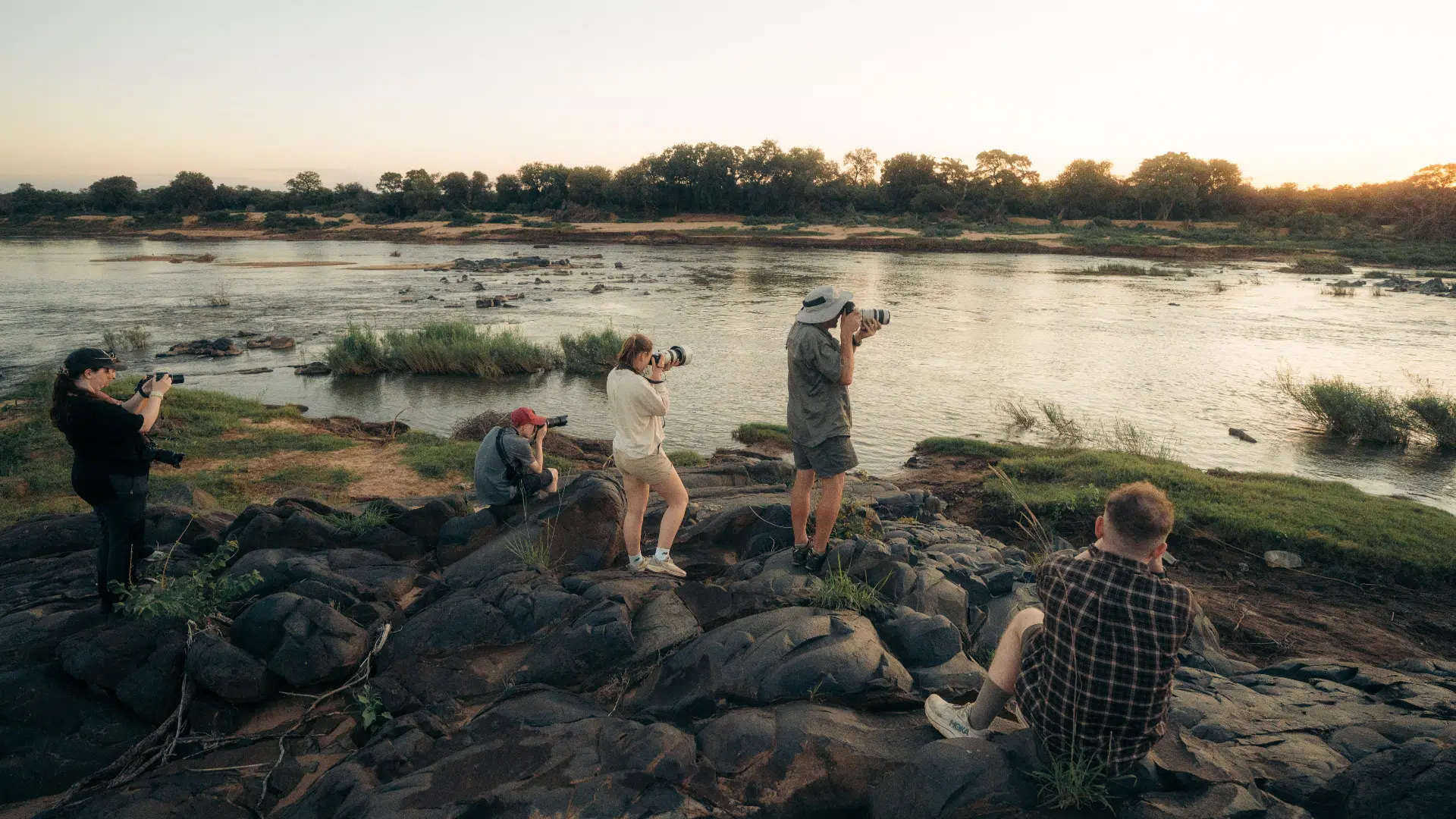
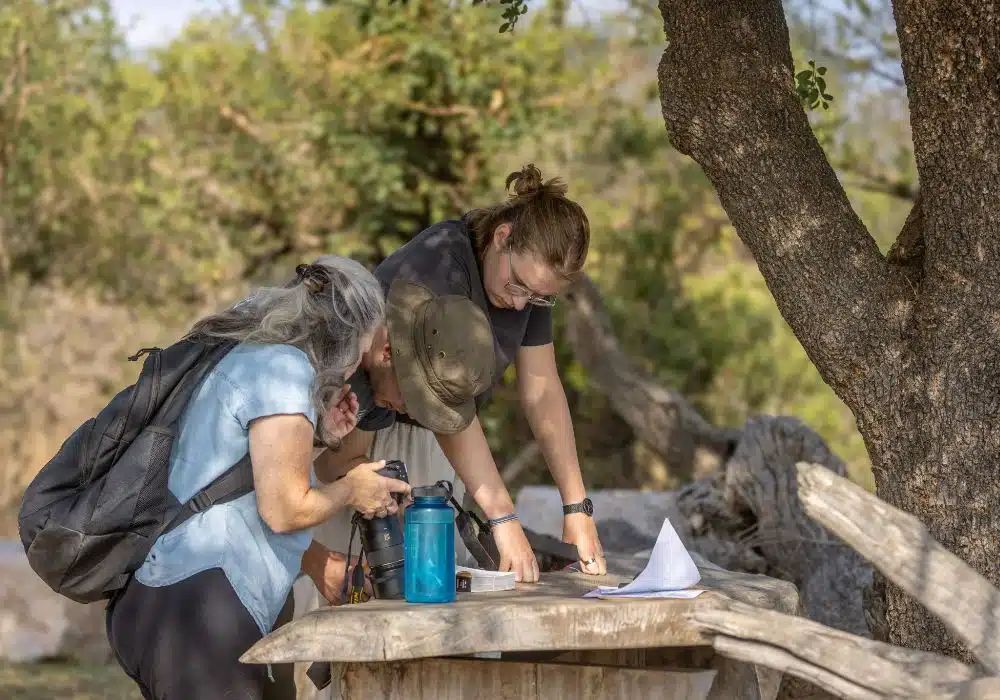
Receive hands-on photography training in the field
Improve your understanding of camera settings, composition, lighting, action photography, and editing workflows.
-
Tell meaningful conservation stories through imagery
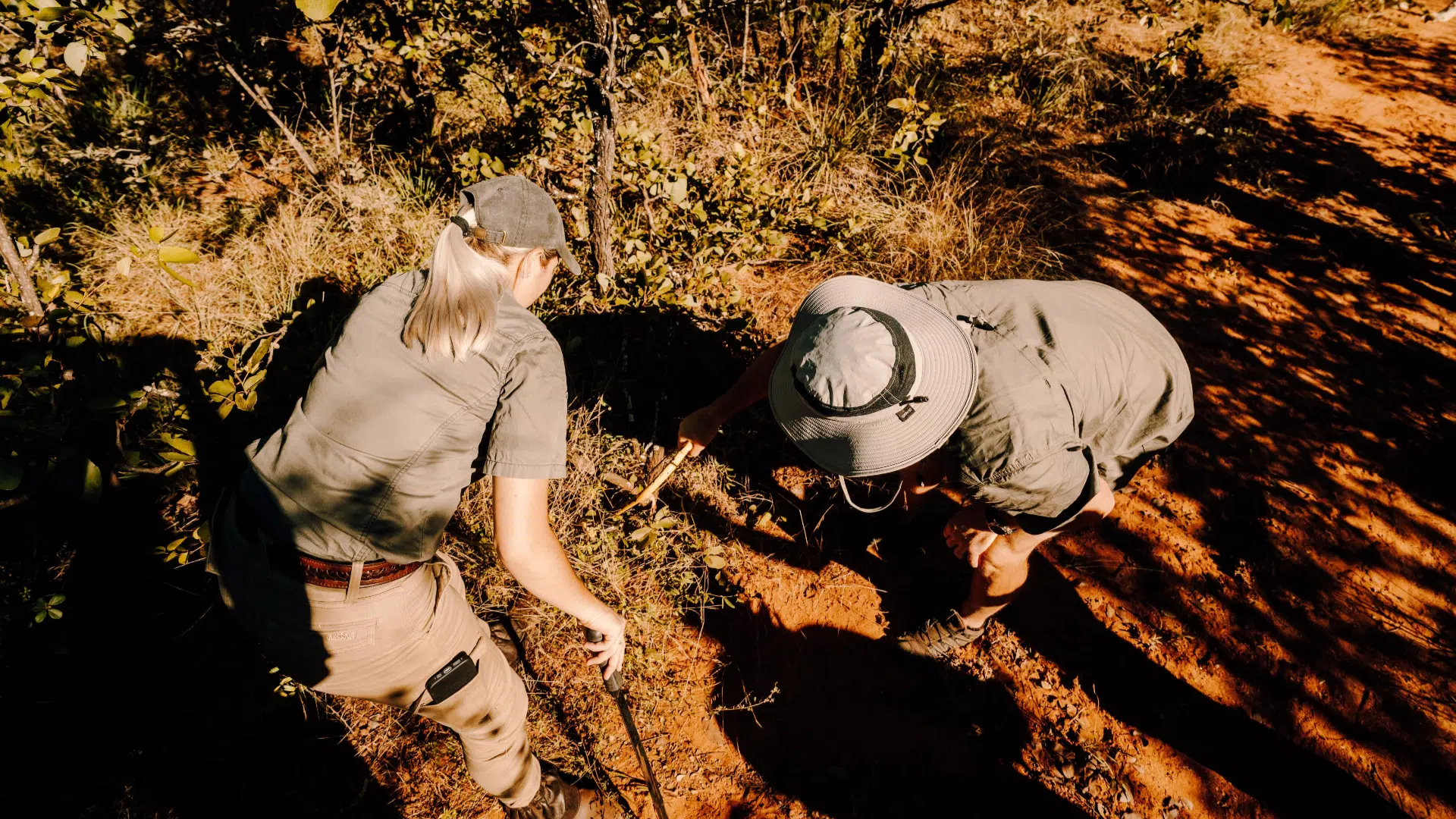
Capture real fieldwork, research activities, and reserve life to help communicate conservation efforts.
-
Work alongside conservation teams
Photograph species monitoring, habitat management, and daily reserve operations from behind the scenes.
-
Build a purpose-driven portfolio
Leave with a collection of conservation-focused images that demonstrate both technical skill and storytelling ability.
What You’ll Do as a Wildlife Photography Volunteer
This project blends structured photography training with real access to a protected Big 5 reserve in South Africa’s Greater Kruger region. Your time will be divided between presentations/lectures, guided field shoots, editing sessions, conservation exposure, and mentorship from experienced photographers and field staff. Each week builds on the last, helping you grow in both technical confidence and storytelling ability.
Why This Project Suits You
If you’re serious about improving your wildlife photography and want more than a standard safari, this project could be a great fit. It’s ideal for gap year students, aspiring conservation photographers, and creatives looking to build practical experience. You don’t need to be a seasoned photographer to join, just a basic understanding of how your camera works and a genuine interest in improving.
By the end of your stay, you’ll have:
Strengthened your technical wildlife photography skills
Gained experience shooting in a protected African reserve
Built a conservation-focused portfolio
Developed an understanding of ethical wildlife photography practices
Learned how visual media supports real conservation efforts
Example Weekly Schedule
Monday
Breakfast
05:00 – 05:30
Morning
05:30 – 10:00 | Photographic Field Session
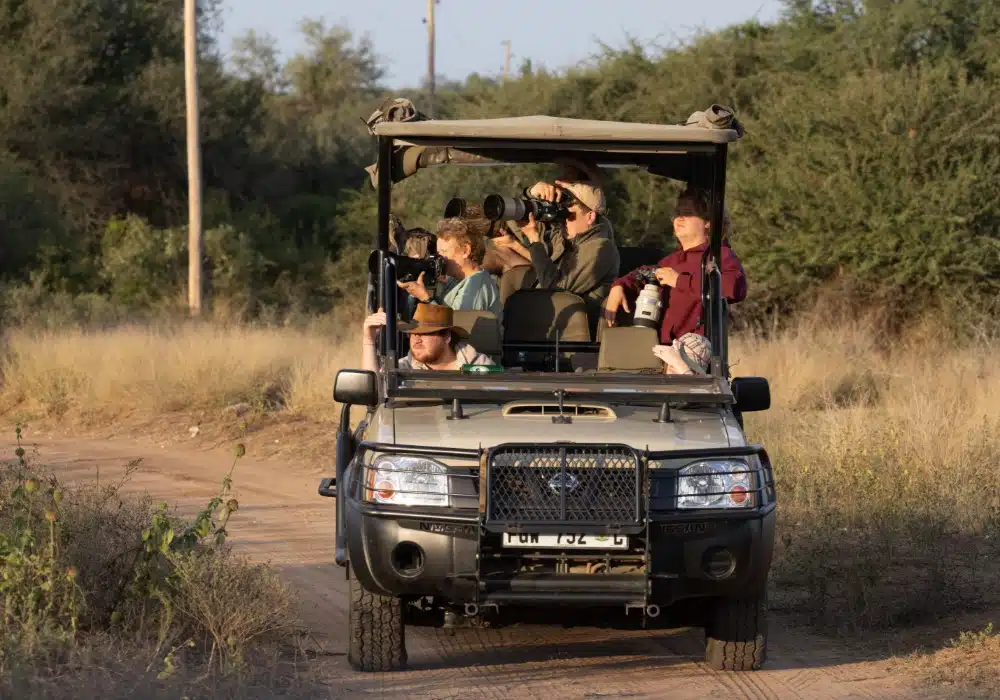
Head out on the game viewer for a session focused on wildlife, landscapes and light conditions.
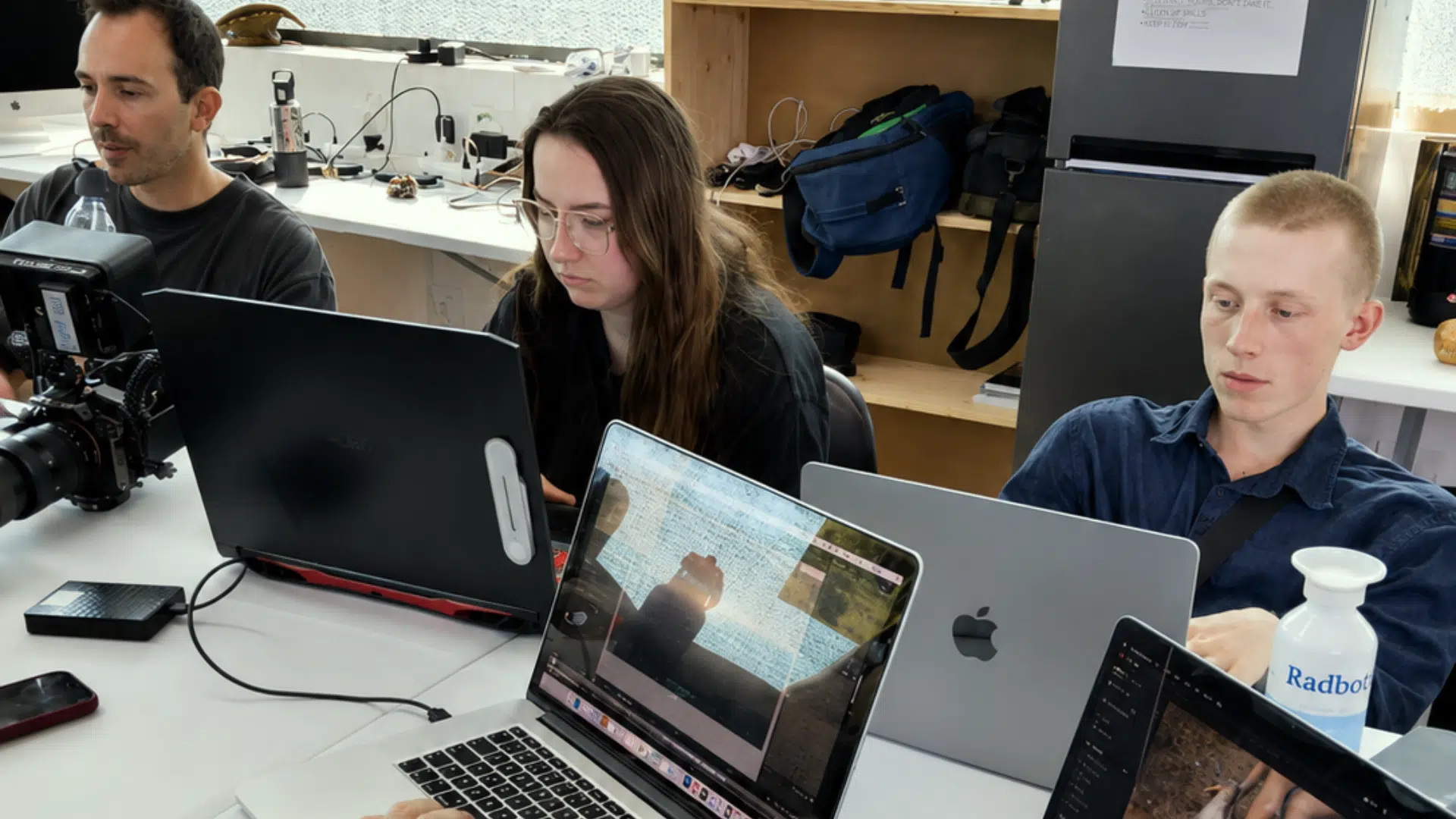
10:30 – 12.00 | Cataloguing & Editing
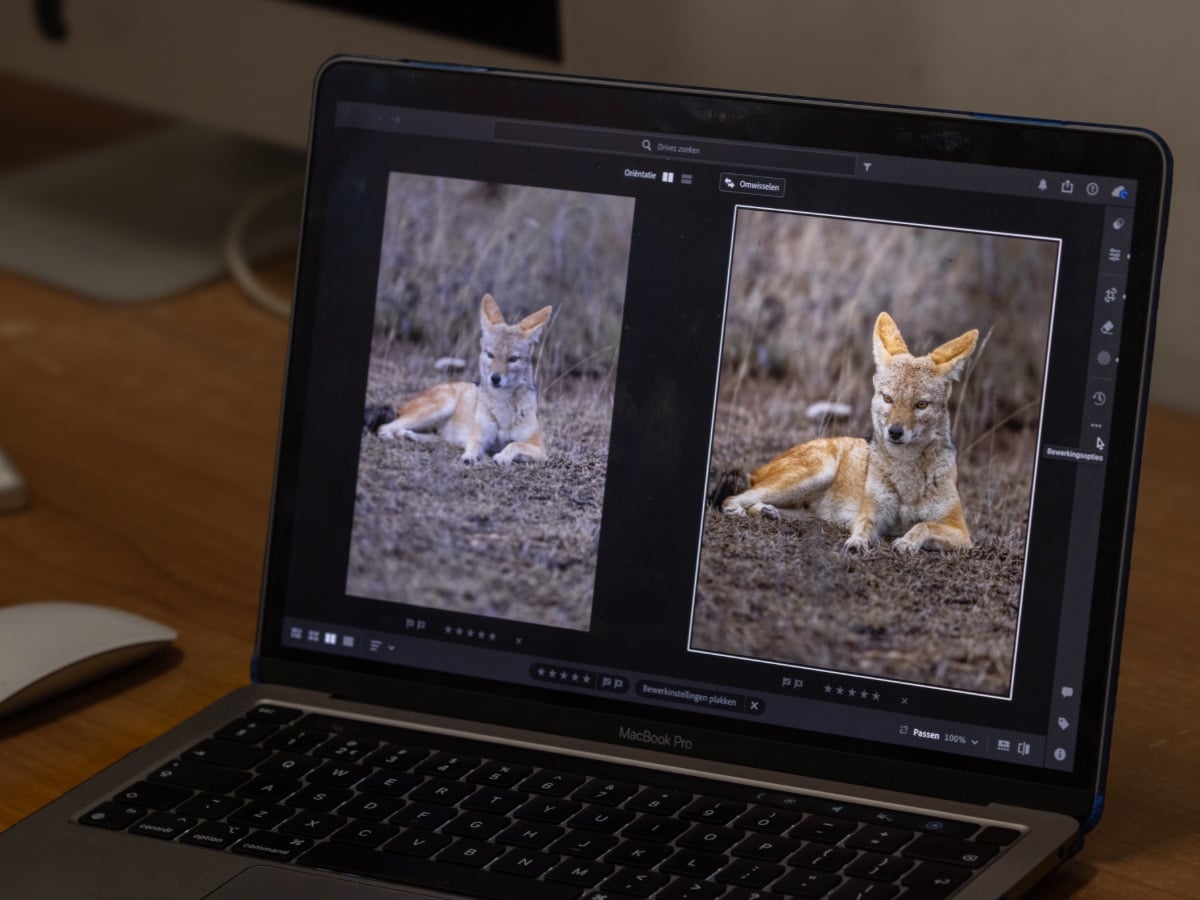
Take some time to download your images, catalogue them and go through some basic editing workflows.
Lunch
12:00 – 13:00
Afternoon
13:00 – 14:00 | Skills Development
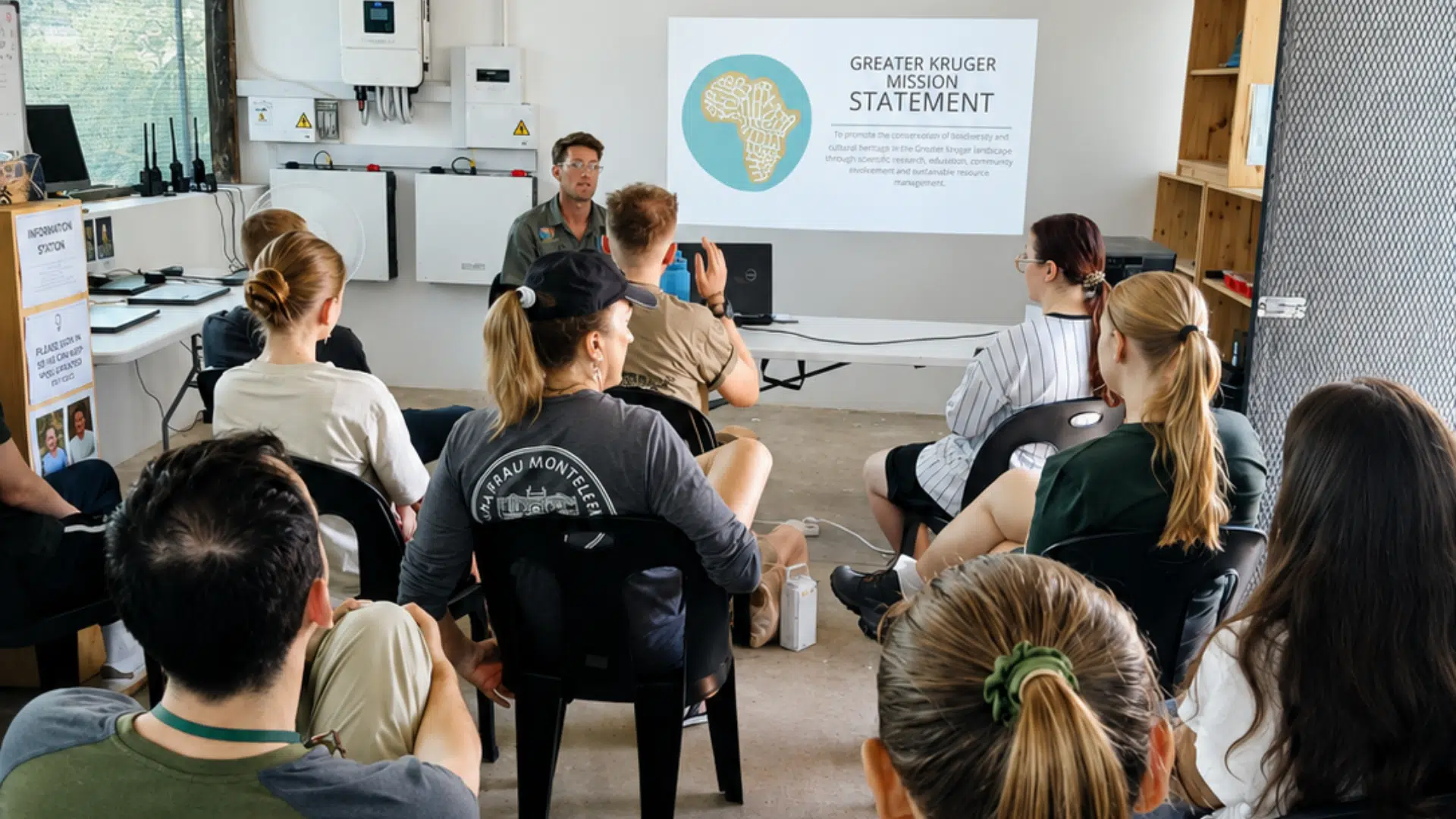
Participate in a photography education and skills development workshop. Topics would include exposure triangle, composition, storytelling through images, file management and editing basics.
14:00 – 15:00 | Free Time
Free time to relax at the base before heading out for the afternoon session.
15:00 – 18:00 | Photographic Field Session
Head back out on the game viewer for your afternoon field session. The focus is on behaviour, movement and environmental storytelling.
Dinner
18:30 – 19:00
Evening
19:00 – 20:00 | Activity Night
Settle in with your fellow volunteers for a fire-pit discussion or fun image reviews and a critique session.
20:00 | Free Time
Tuesday
Breakfast
05:00 – 05:30
Morning
05:30 – 10:00 | Photographic Field Session
Head out on the game viewer for a session focused on bird photography, macro or habitat-focused imagery – depending on weather conditions.
10:30 – 12.00 | Cataloguing & Editing
Take some time to download your images, catalogue them and go through some basic editing workflows.
Lunch
12:00 – 13:00
Afternoon
13:00 – 14:00 | Skills Development
Participate in a photography education and skills development workshop. Topics would include lighting, colour theory and basic Lightroom workflows.
14:00 – 18:30 | Free Time
Free time to relax at the base, or participate in optional editing or mentoring sessions.
Dinner
18:30 – 19:00
Evening
19:00 – 21:30 | Night Photography Session
Improve your night time photography skills with focus on low-light techniques, spotlight etiquette and ethical nocturnal photography.
Wednesday
Breakfast
05:00 – 05:30
Morning
05:30 – 10:00 | Photographic Field Session
Head out on the game viewer for a session focused on wildlife behaviour and tracking stories through imagery.
10:30 – 12.00 | Cataloguing & Editing
Take some time to download your images, catalogue them and go through some basic editing workflows.
Lunch
12:00 – 13:00
Afternoon
13:00 – 14:00 | Skills Development
Participate in a photography education and skills development workshop. Topics would include story boarding, sequencing images and conservation storytelling.
14:00 – 15:00 | Free Time
Free time to relax at the base, or participate in optional editing or mentoring sessions.
15:00 – 18:00 | Photographic Field Session
Head out in the game viewer for your afternoon session in the field. The focus is typically on landscape, conservation work or community-centered imagery.
Dinner
18:30 – 19:00
Evening
19:00 – 20:00 | Free Time
Enjoy some down time at the base and swap stories with your fellow volunteers before heading to bed.
Thursday
Breakfast
05:00 – 05:30
Morning
05:30 – 10:00 | Photographic Field Session
Head out on the game viewer for a session focused on documenting research activities, habitat restoration or conservation operations.
10:30 – 12.00 | Cataloguing & Editing
Take some time to download your images, catalogue them and go through some basic editing workflows.
Lunch
12:00 – 13:00
Afternoon
13:00 – 14:00 | Skills Development
Participate in a photography education and skills development workshop. Topics would include ethics, caption writing and use of imagery in conservation marketing.
14:00 – 15:00 | Free Time
Free time to relax at the base, or participate in optional editing or mentoring sessions.
15:00 – 18:00 | Photographic Field Session
Head back out in the game viewer for your afternoon portfolio-focused shooting session in the field, capturing some great shots to build out your portfolio.
Dinner
18:30 – 19:00
Evening
19:00 – 20:00 | Free Time
Enjoy some down time at the base and swap stories with your fellow volunteers before heading to bed.
Friday
Breakfast
05:00 – 05:30
Morning
05:30 – 10:00 | Photographic Field Session
Head out on the game viewer for your final field session of the week.
10:30 – 12.00 | Cataloguing & Editing
Take some time to download your images, catalogue them and go through some basic editing workflows. You can also work on image selection for your portfolio.
Lunch
12:00 – 13:00
Afternoon
13:00 | Town Trip
Volunteers depart for the weekly trip to town, where you have the opportunity to visit the local stores. Volunteers staying at the base will return for dinner, volunteers spending the weekend out on weekend activities will head off on their adventures from town.
Dinner
18:30 – 19:00
Evening
19:00 – 20:00 | Free Time
Enjoy some down time at the base and swap stories with your fellow volunteers before heading to bed.
Project Location
Greater Kruger, South Africa
Life in the Greater Kruger Landscape
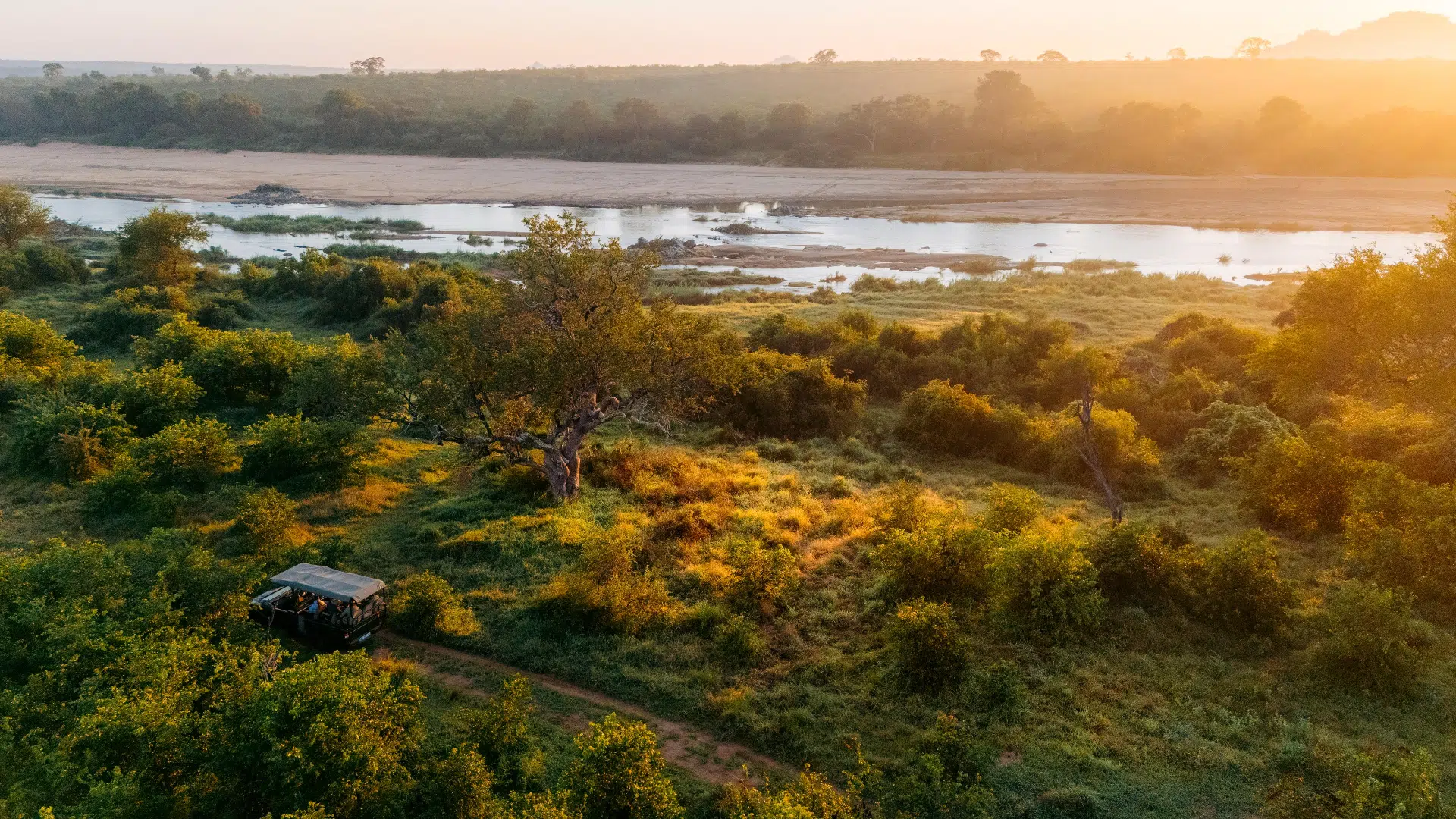
This project is set within a private game reserve within the Greater Kruger region of South Africa, one of the most well-known wildlife conservation areas in the world. And as a volunteer, you’re not just visiting, you’re living and working within the same landscape, waking up each day surrounded by protected wilderness. Mornings begin early, often before the heat of the day sets in. Evenings wind down around the fire, with wildlife sounds carrying through the darkness. There are no crowds or tour buses: just a small camp, a research team, and thousands of hectares of protected land around you. Plus, living here means wildlife sightings are part of everyday life. You might see elephants near camp or hear lions at night.
Being based in this region also means you’re within reach of some of South Africa’s most iconic attractions. During your time off, there are some great optional activities, such as:
- Visiting Kruger National Park for additional game drives
- Exploring the Panorama Route and its scenic viewpoints
- Cultural visits to nearby communities
- Guided bush walks or wildlife excursions
- Relaxing in a nearby regional town
Accommodation
Your Volunteer Home in the Kruger Area
You’ll stay in a rustic research camp located inside the reserve itself, meaning you’re fully immersed in the landscape from the moment you wake up. Accommodation is simple and practical, designed for fieldwork rather than luxury, but comfortable enough to relax after long days outdoors. You’ll share dorm-style rooms in traditional African huts or safari tents, creating a strong sense of team life and shared experience. Please note images are renderings, camp is under construction.
The camp offers several communal areas, including a boma (outdoor fire area) where evenings are often spent together. Living here means early mornings, wildlife sounds at night, and a real sense of being part of a working reserve.
Meals are simple, hearty, and designed to fuel active days in the bush. Most dishes are traditional South African in style, often prepared over an open fire or in the camp kitchen and shared together as a group. Expect filling, home-style meals that prioritise energy and practicality over presentation; the kind of food that tastes even better after a morning spent tracking wildlife. Breakfast is usually light and quick before heading into the field, while lunches and dinners are more substantial. Evenings often centre around the boma, where cooking and eating become part of the social rhythm of camp life. Fresh produce is sourced locally when available, and dietary requirements such as vegetarian and vegan options can be accommodated with advance notice.
You’ll be guided by an experienced team of conservation professionals, field guides, and reserve staff who oversee research, habitat management, and wildlife protection. They bring practical knowledge of predator ecology, elephant behaviour, bush safety, and ecosystem management, and they’ll train you in the skills you need to contribute effectively. From your first day, the team will provide an in-depth orientation covering field protocols, data collection methods, and safety procedures. Throughout your stay, they’ll supervise activities, answer questions, and help you understand the bigger conservation picture behind each task.
Due to the reserve’s remote location within the Greater Kruger landscape, connectivity is limited. Phone signal can be intermittent depending on your network provider, and WiFi is not guaranteed at camp. Many volunteers see this as part of the experience – a chance to step away from constant notifications and fully immerse themselves in life in the bush. Electricity is typically solar-powered or generator-supported, which means power availability may follow certain schedules. Charging points are available, but bringing a power bank is strongly recommended. Before arrival, you’ll receive clear guidance on what to expect regarding connectivity, along with emergency contact details that can be shared with family at home.
Needless to say, your safety is a priority at all times. On arrival, you’ll receive a detailed bush safety induction covering wildlife awareness, safe distances, emergency procedures, and behaviour protocols in the presence of large animals. All field activities are supervised by trained conservation staff and experienced field guides. As a volunteer, you’re never expected to operate independently in areas where wildlife is present. Clear communication systems are in place, and staff are trained in emergency response and first aid. Anti-poaching operations involving enforcement are conducted only by professional rangers. Your role supports conservation efforts within a structured and carefully managed environment designed to prioritise both volunteer and wildlife safety.
Accommodation
You’ll stay in a rustic research camp located inside the reserve itself, meaning you’re fully immersed in the landscape from the moment you wake up. Accommodation is simple and practical, designed for fieldwork rather than luxury, but comfortable enough to relax after long days outdoors. You’ll share dorm-style rooms in traditional African huts or safari tents, creating a strong sense of team life and shared experience. Please note images are renderings, camp is under construction.
The camp offers several communal areas, including a boma (outdoor fire area) where evenings are often spent together. Living here means early mornings, wildlife sounds at night, and a real sense of being part of a working reserve.
The Meals
Meals are simple, hearty, and designed to fuel active days in the bush. Most dishes are traditional South African in style, often prepared over an open fire or in the camp kitchen and shared together as a group. Expect filling, home-style meals that prioritise energy and practicality over presentation; the kind of food that tastes even better after a morning spent tracking wildlife. Breakfast is usually light and quick before heading into the field, while lunches and dinners are more substantial. Evenings often centre around the boma, where cooking and eating become part of the social rhythm of camp life. Fresh produce is sourced locally when available, and dietary requirements such as vegetarian and vegan options can be accommodated with advance notice.
Support Team
You’ll be guided by an experienced team of conservation professionals, field guides, and reserve staff who oversee research, habitat management, and wildlife protection. They bring practical knowledge of predator ecology, elephant behaviour, bush safety, and ecosystem management, and they’ll train you in the skills you need to contribute effectively. From your first day, the team will provide an in-depth orientation covering field protocols, data collection methods, and safety procedures. Throughout your stay, they’ll supervise activities, answer questions, and help you understand the bigger conservation picture behind each task.
Safety
Needless to say, your safety is a priority at all times. On arrival, you’ll receive a detailed bush safety induction covering wildlife awareness, safe distances, emergency procedures, and behaviour protocols in the presence of large animals. All field activities are supervised by trained conservation staff and experienced field guides. As a volunteer, you’re never expected to operate independently in areas where wildlife is present. Clear communication systems are in place, and staff are trained in emergency response and first aid. Anti-poaching operations involving enforcement are conducted only by professional rangers. Your role supports conservation efforts within a structured and carefully managed environment designed to prioritise both volunteer and wildlife safety.
Connectivity
Due to the reserve’s remote location within the Greater Kruger landscape, connectivity is limited. Phone signal can be intermittent depending on your network provider, and WiFi is not guaranteed at camp. Many volunteers see this as part of the experience – a chance to step away from constant notifications and fully immerse themselves in life in the bush. Electricity is typically solar-powered or generator-supported, which means power availability may follow certain schedules. Charging points are available, but bringing a power bank is strongly recommended. Before arrival, you’ll receive clear guidance on what to expect regarding connectivity, along with emergency contact details that can be shared with family at home.
Pricing
Rates
| Duration | Program Fee |
|---|---|
| 4 weeks | $3,950 ($988 per week) |
| 5 weeks | $4,750 ($950 per week) |
| 6 weeks | $5,550 ($925 per week) |
| 8 weeks | $7,150 ($894 per week) |
| 10 weeks | $8,750 ($875 per week) |
| 12 weeks | $10,350 ($863 per week) |
| 4 weeks | £3,160 (£790 per week) |
| 5 weeks | £3,800 (£760 per week) |
| 6 weeks | £4,440 (£740 per week) |
| 8 weeks | £5,720 (£715 per week) |
| 10 weeks | £7,000 (£700 per week) |
| 12 weeks | £8,280 (£690 per week) |
| 4 weeks | €3,634 (€909 per week) |
| 5 weeks | €4,370 (€874 per week) |
| 6 weeks | €5,106 (€851 per week) |
| 8 weeks | €6,578 (€823 per week) |
| 10 weeks | €8,050 (€805 per week) |
| 12 weeks | €9,522 (€794 per week) |
| 4 weeks | $5,846 ($1,462 per week) |
| 5 weeks | $7,030 ($1,406 per week) |
| 6 weeks | $8,214 ($1,369 per week) |
| 8 weeks | $10,582 ($1,323 per week) |
| 10 weeks | $12,950 ($1,295 per week) |
| 12 weeks | $15,318 ($1,277 per week) |
Inclusions
- African Impact bush style accommodation
- Breakfast, lunch and dinner (Mon - Sun)
- Airport transfers on arrival and departure
- All project transport, equipment and resources
- Guidance and workshops from a professional photographer
- Support from experienced local and international African Impact staff
- Full orientation for responsible project contribution
Exclusions
- Camera equipment
- Flights
- Visas
- Insurance
- Weekend tours
- Personal expenses
Flights & Arrivals
Hoedspruit Airport (HDS) is your best bet. Arrive anytime on the Sunday that your placement begins and depart anytime on the Sunday it ends. We’ll be there to greet you! Look for the African Impact sign and a friendly face ready to welcome you. If you are arriving from somewhere other than Hoedspruit, our partner shuttle company offers African Impact volunteers a discount when booking with a promo code. Please request this from your Destination Specialist.
Requirements
- The minimum age to join this project is 18 years old
- The minimum stay for this project is 2 weeks
Award-winning Volunteer and Internship Projects Since 2004
Enquire now
Volunteering in Africa means travelling with purpose- joining meaningful community or conservation projects, where you pay to cover your stay and project costs, turning your trip into an immersive, impactful experience rather than a traditional holiday.
"*" indicates required fields
Project faqs
What Kind Of Wildlife Will I Be Photographing?
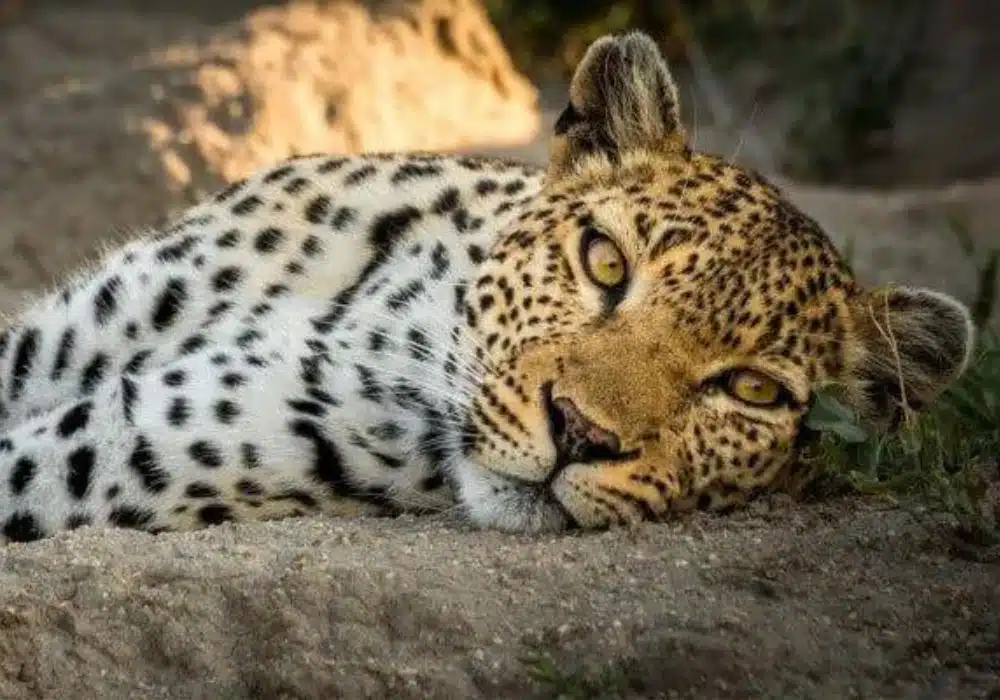
The Greater Kruger Area boasts incredible biodiversity, including the African Big 5 (lion, elephant, leopard, rhino, and buffalo), plus diverse antelope, hippos, crocodiles, hyenas, giraffe, zebra, and countless bird species. Your specific encounters will depend on the season, location, and luck, but rest assured, you’ll have ample opportunities to capture magnificent wildlife moments as a wildlife photography volunteer.
Will I Be Able To Photograph The Big 5 At This Project?
Whilst there is evidence of the African Big 5 (lion, elephant, leopard, rhino and buffalo) all around us, we cannot guarantee that you will see them all. Our project is based in a wilderness area where animals roam freely and do as they please, however, the Olifants River in front of our base attracts plenty of elephants, hippos, crocodiles and a multitude of bird species.
Do I Need Prior Photography Experience?
Absolutely not! Our wildlife photography program welcomes enthusiasts at all levels, especially those driven by a passion to learn and capture the magic of Africa’s wildlife. Our expert guides will provide comprehensive training and mentorship, equipping you with the skills and knowledge needed to transform your passion into stunning images. So, whether you’re a seasoned photographer or just starting your journey, a true photography adventure awaits!
How Does My Photography Contribute To Conservation Efforts?
Our wildlife photography volunteer program often partners with research institutions or conservation NGOs, which means your photos may be used for various purposes, such as monitoring animal populations, documenting specific behaviors, raising awareness about threats, or contributing to educational materials. You’ll gain a deeper understanding of conservation challenges while playing your part in protecting Africa’s precious wildlife.
Our favourite weekend activities in the Kruger Area
Head out on a Kruger safari, explore the epic viewpoints of the Panorama Route at Blyde River Canyon, visit conservation initiatives like Down To The Wire or Rhino Revolution, or add a thrill with quad biking and adventure activities at Magoebaskloof!