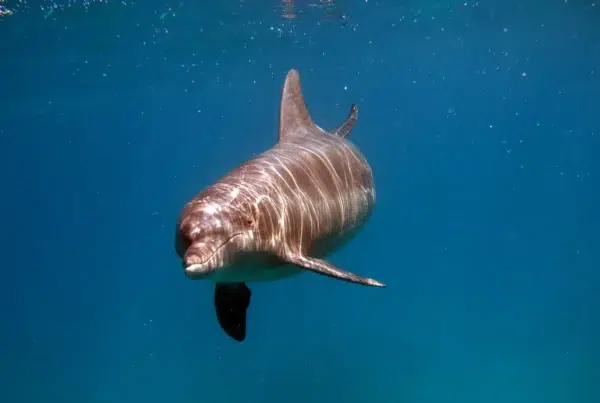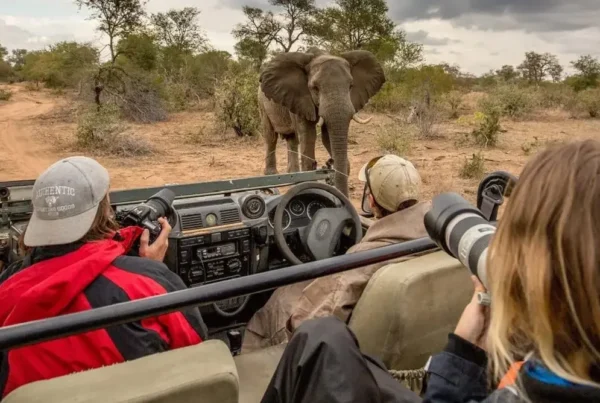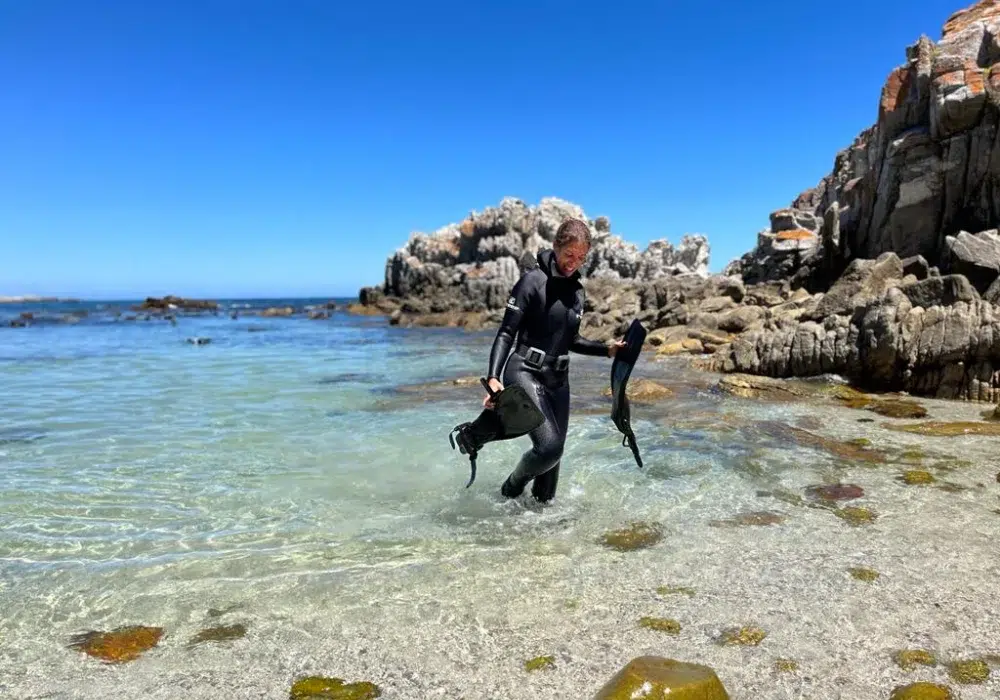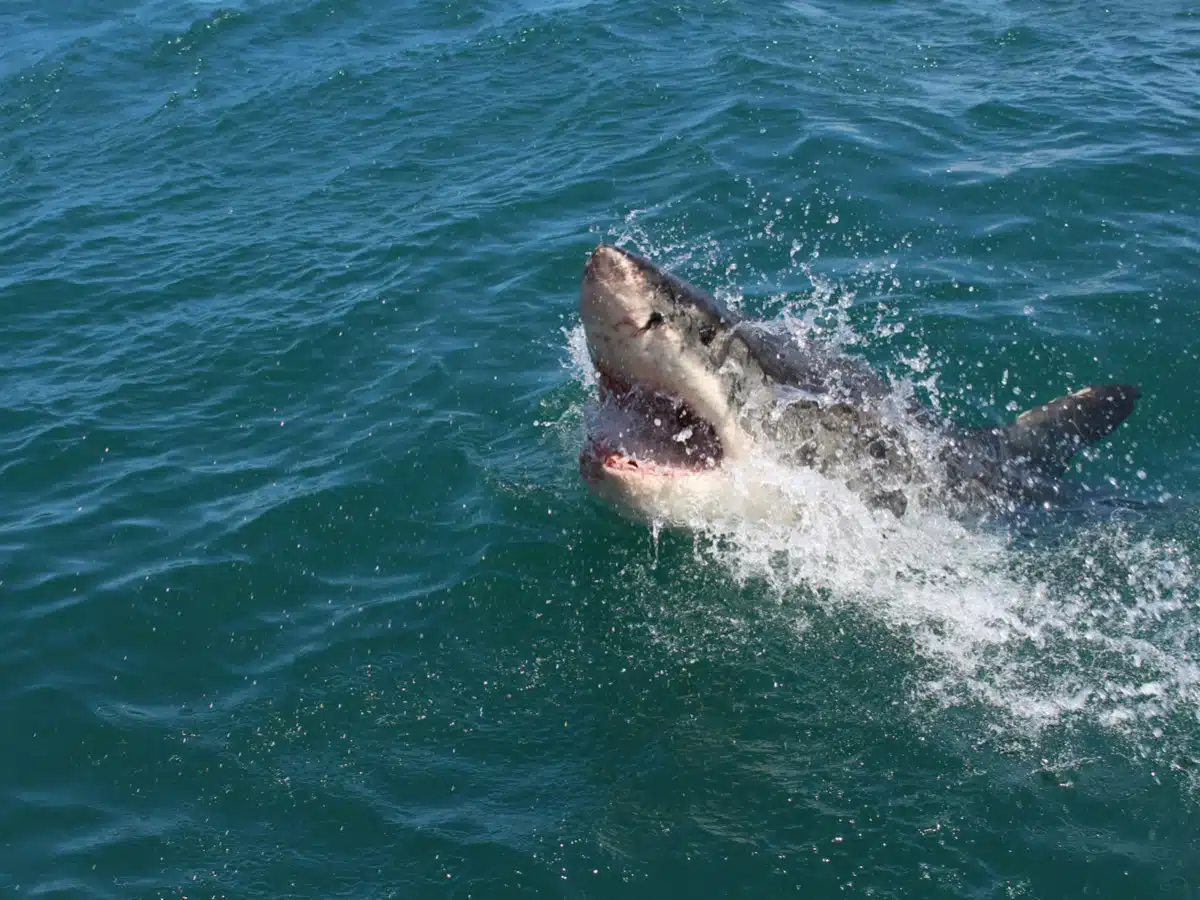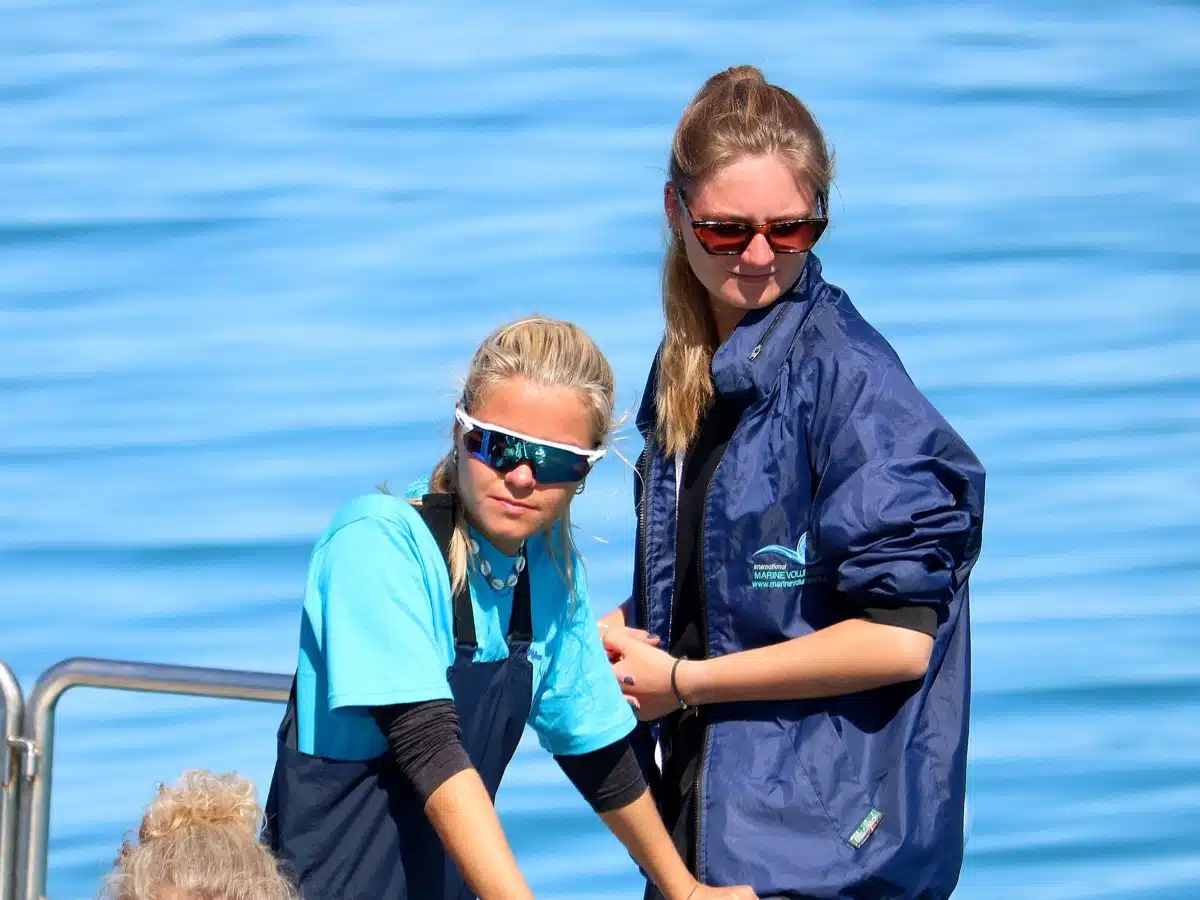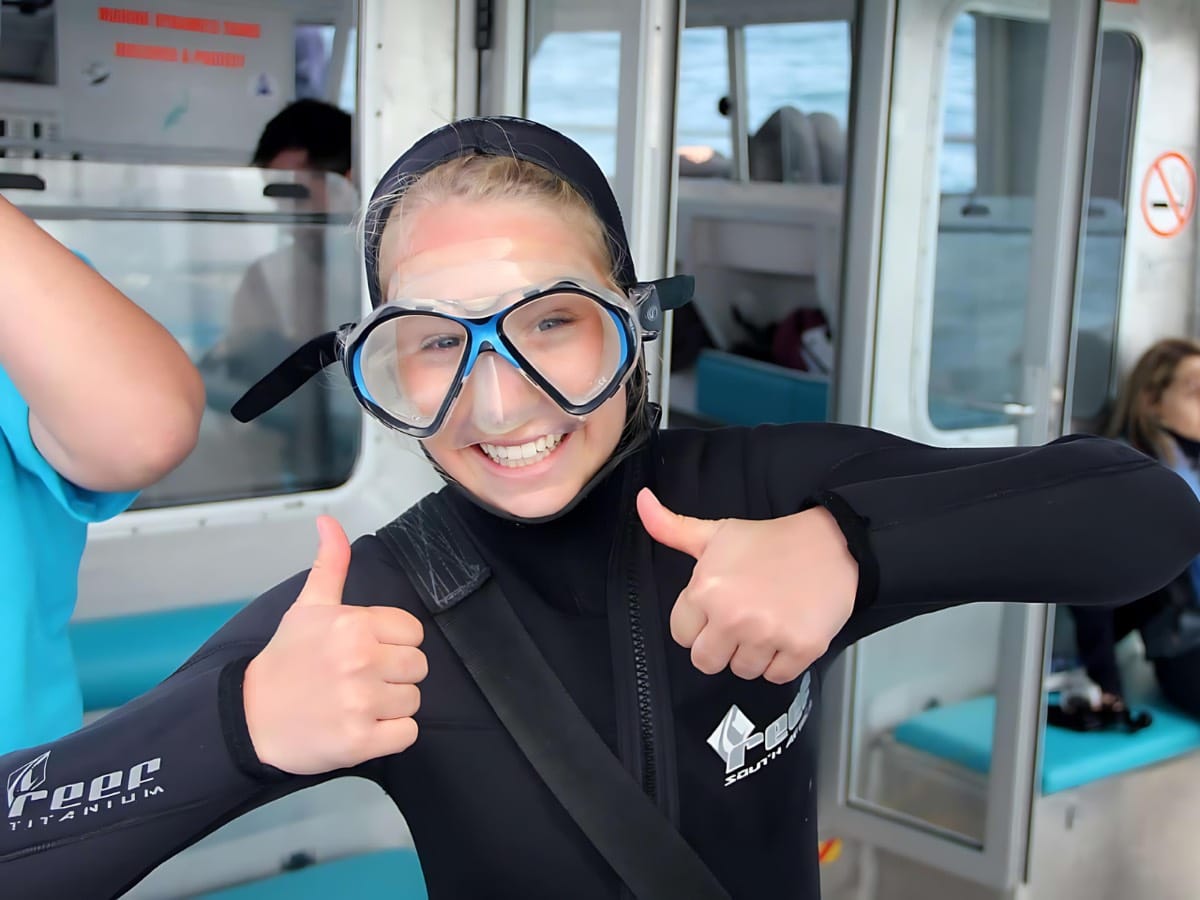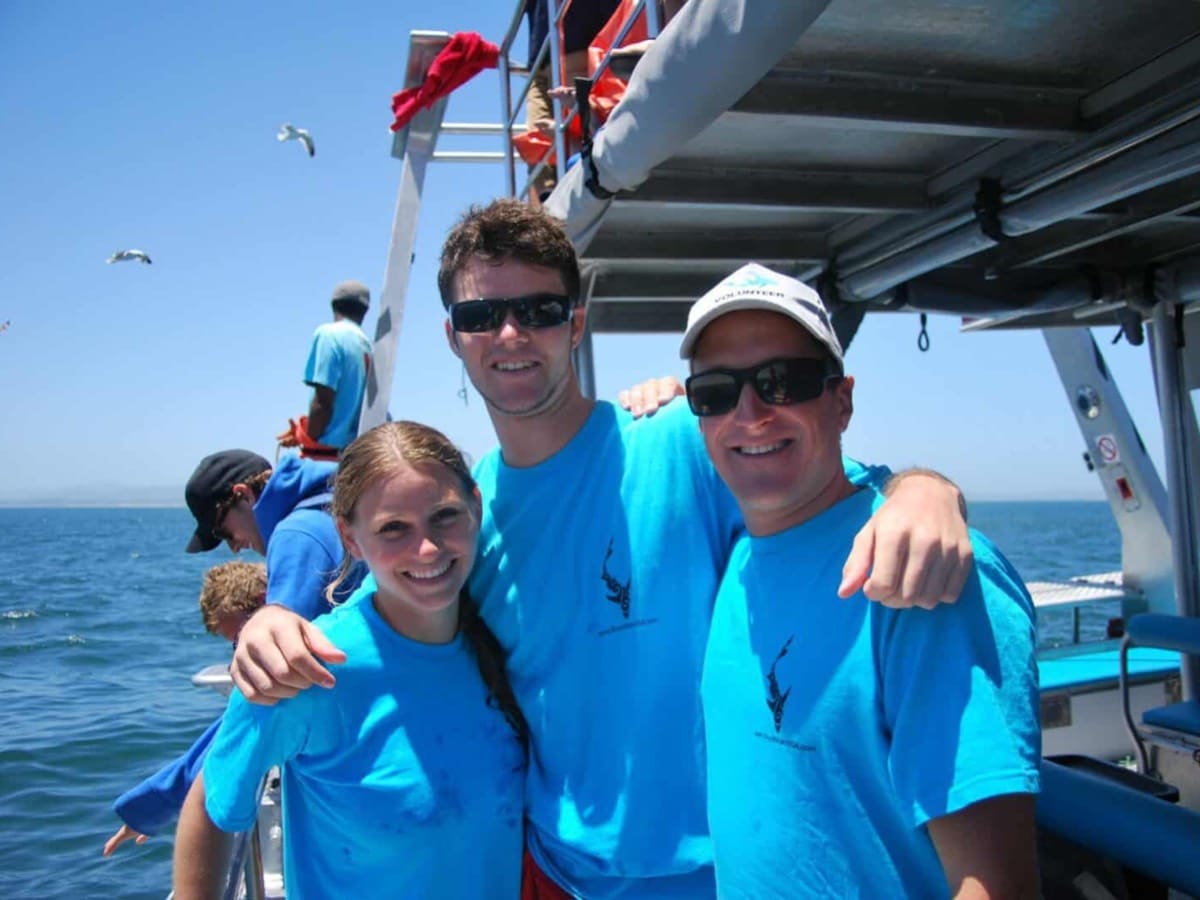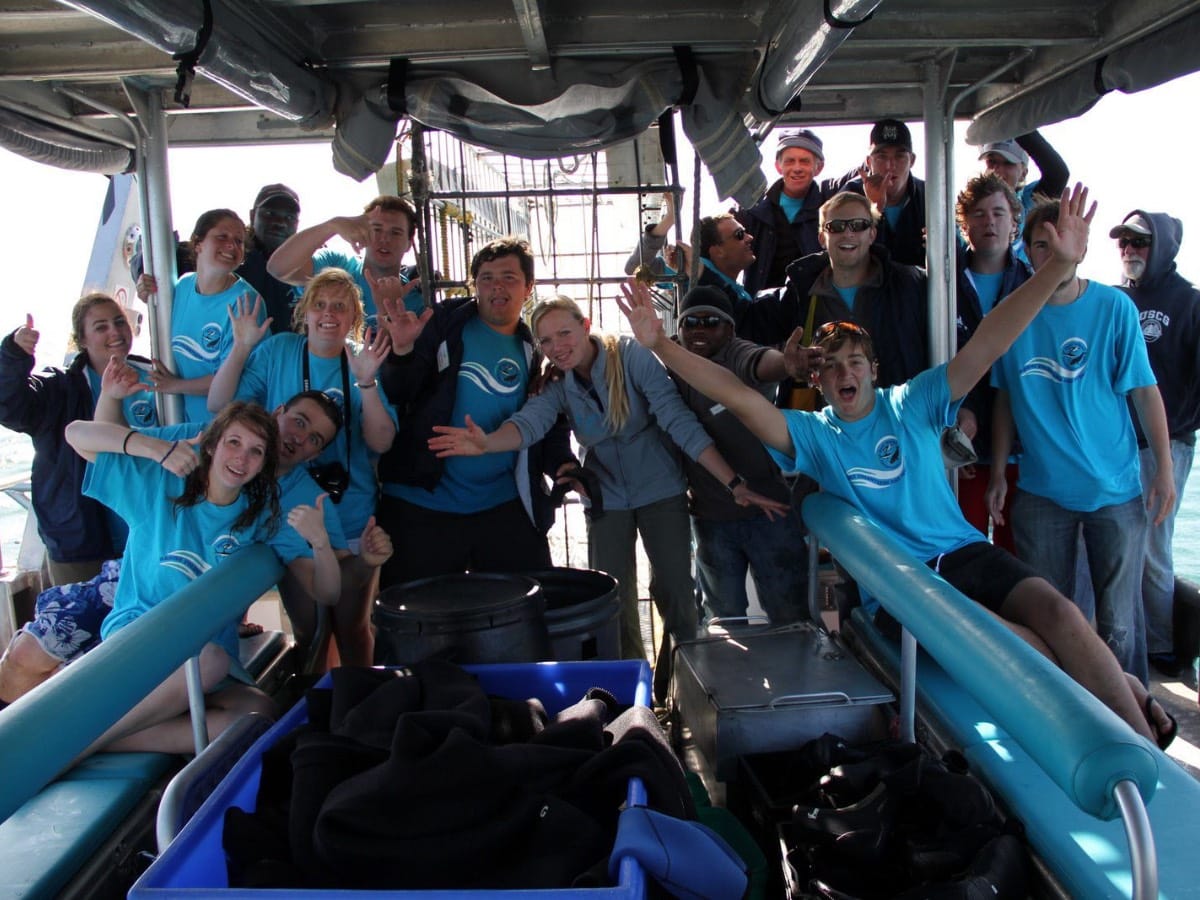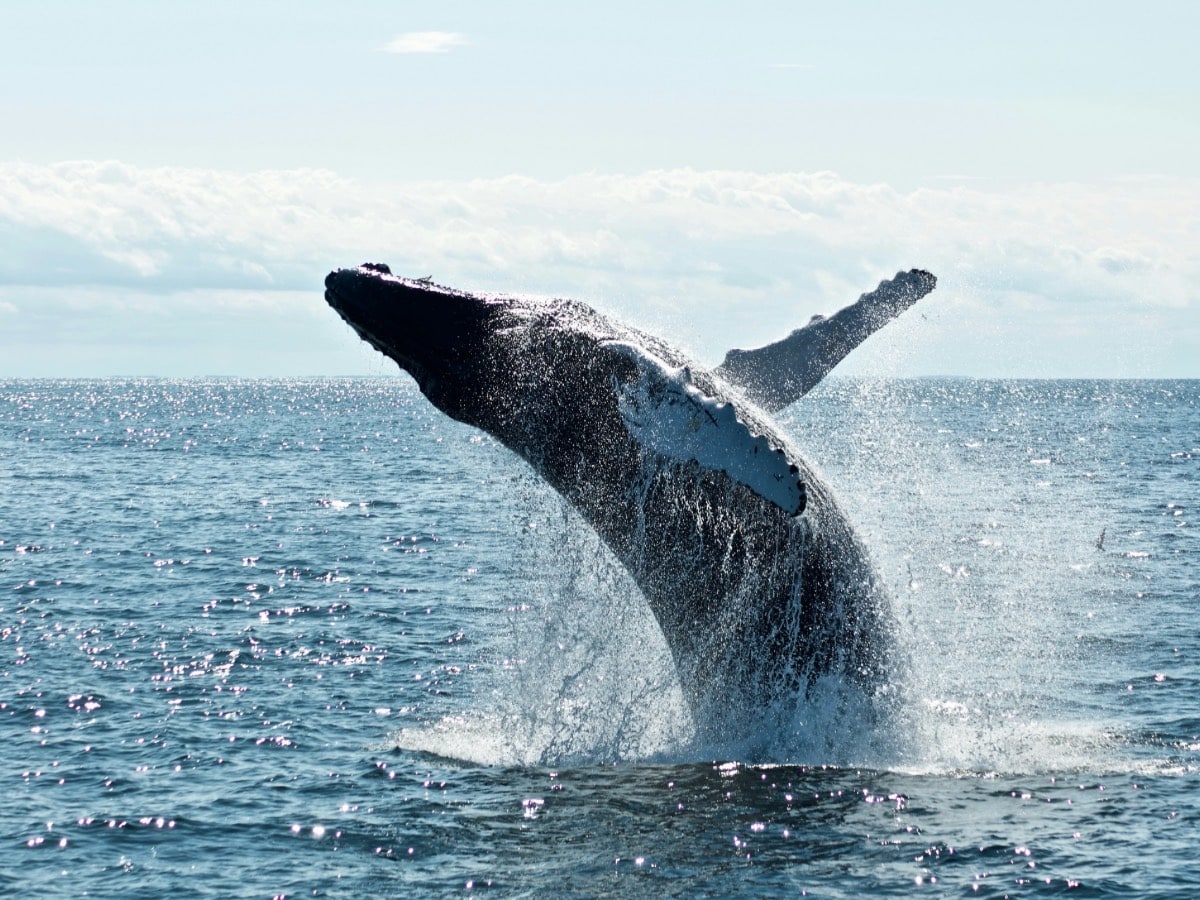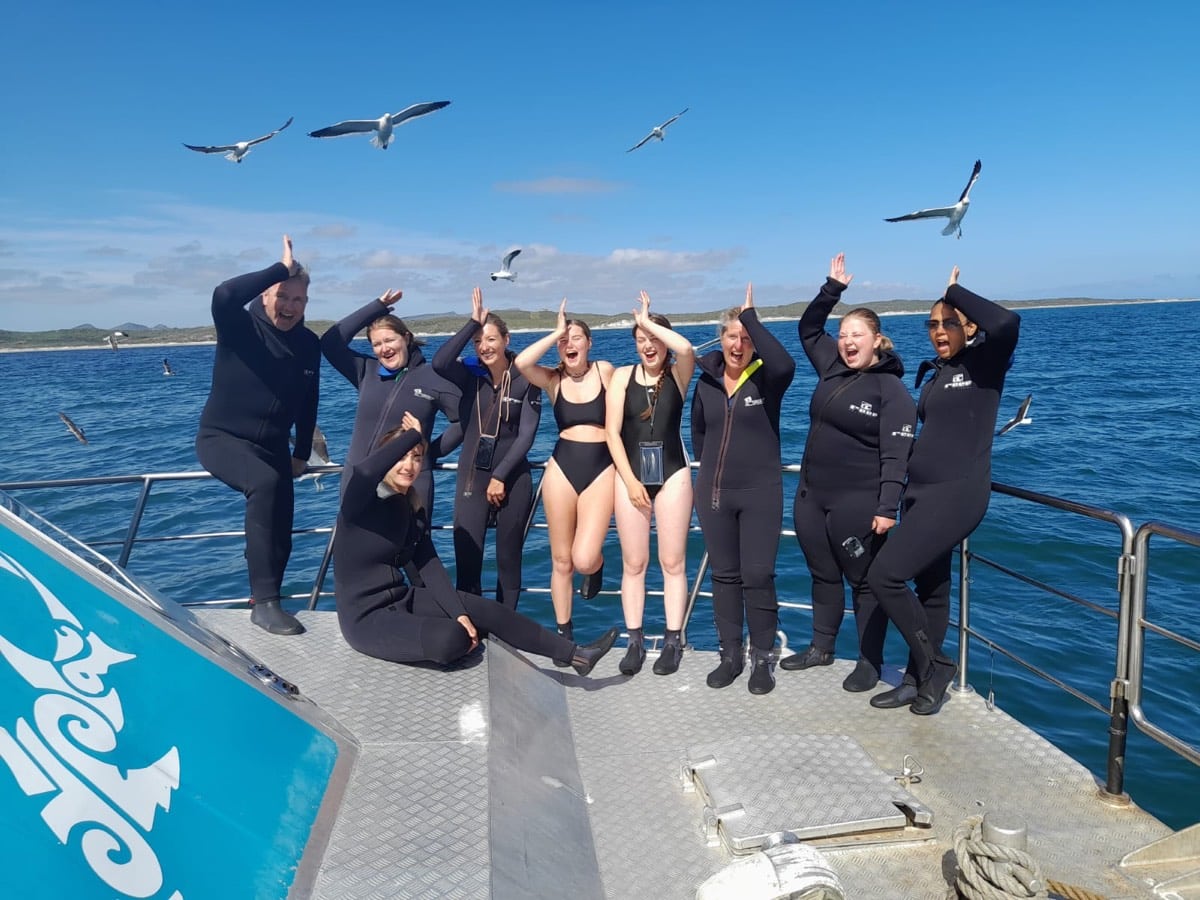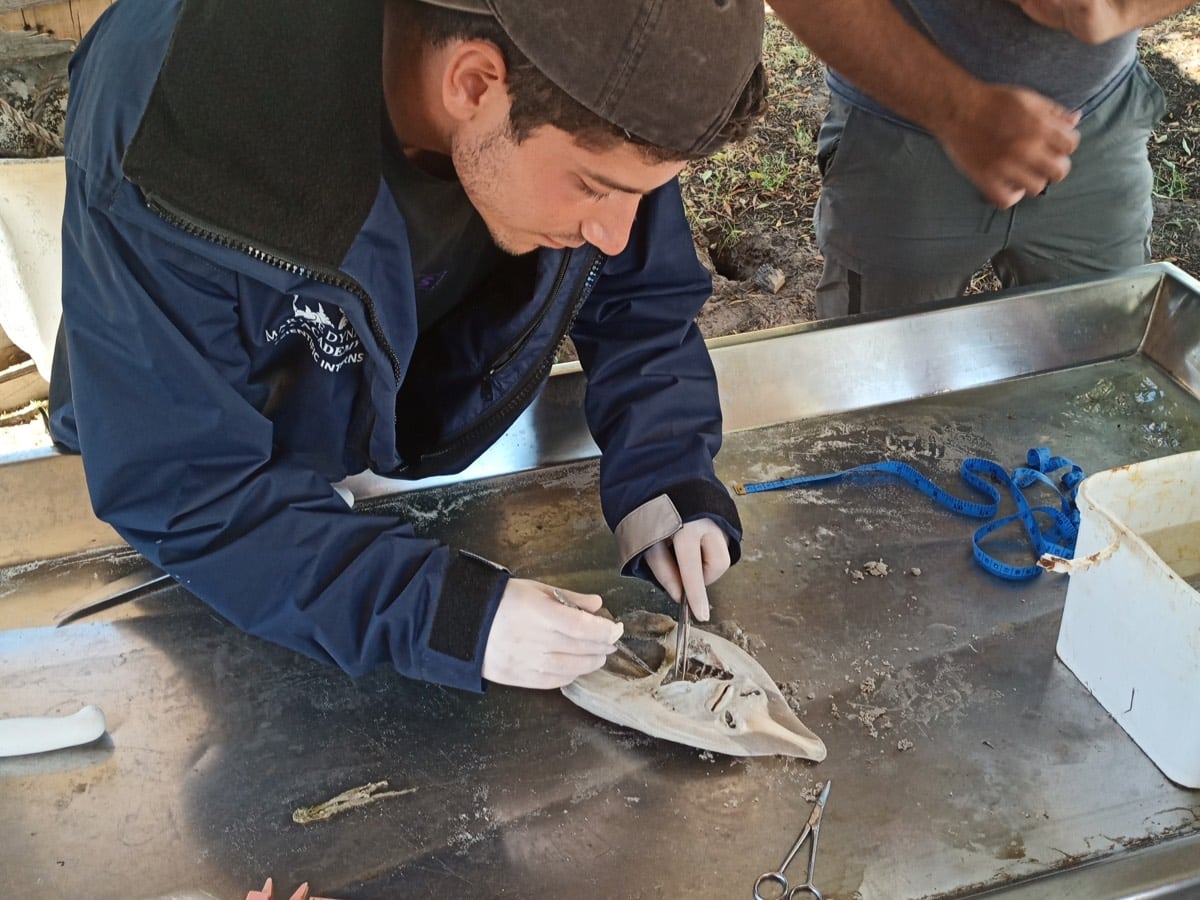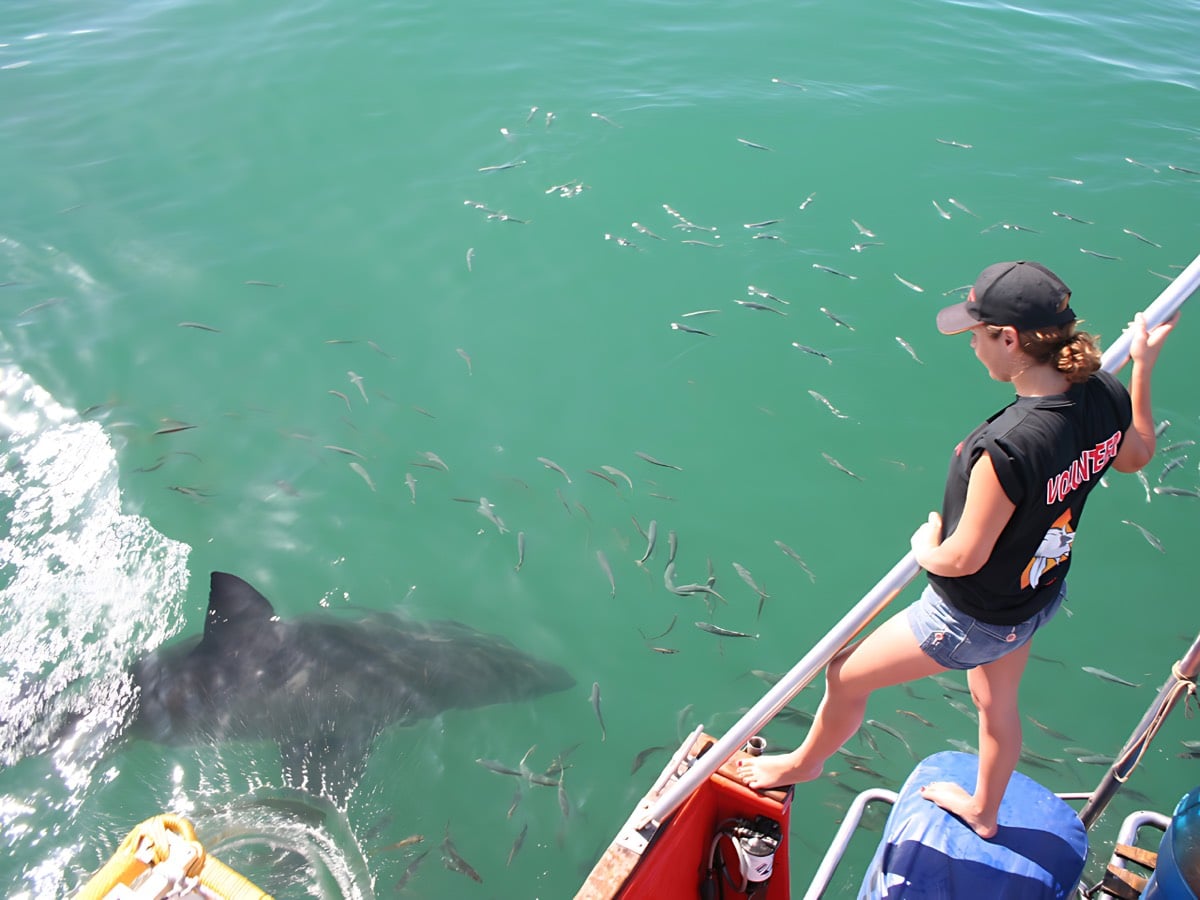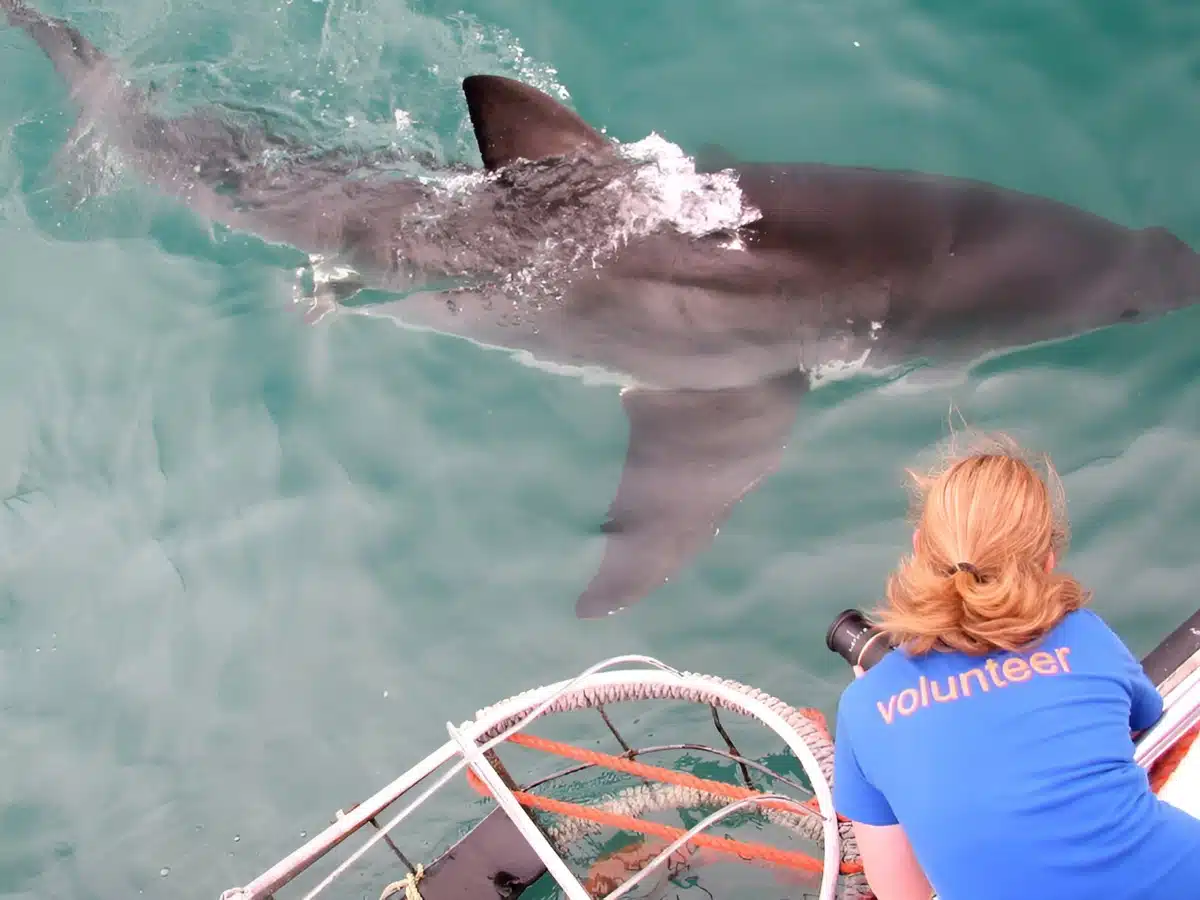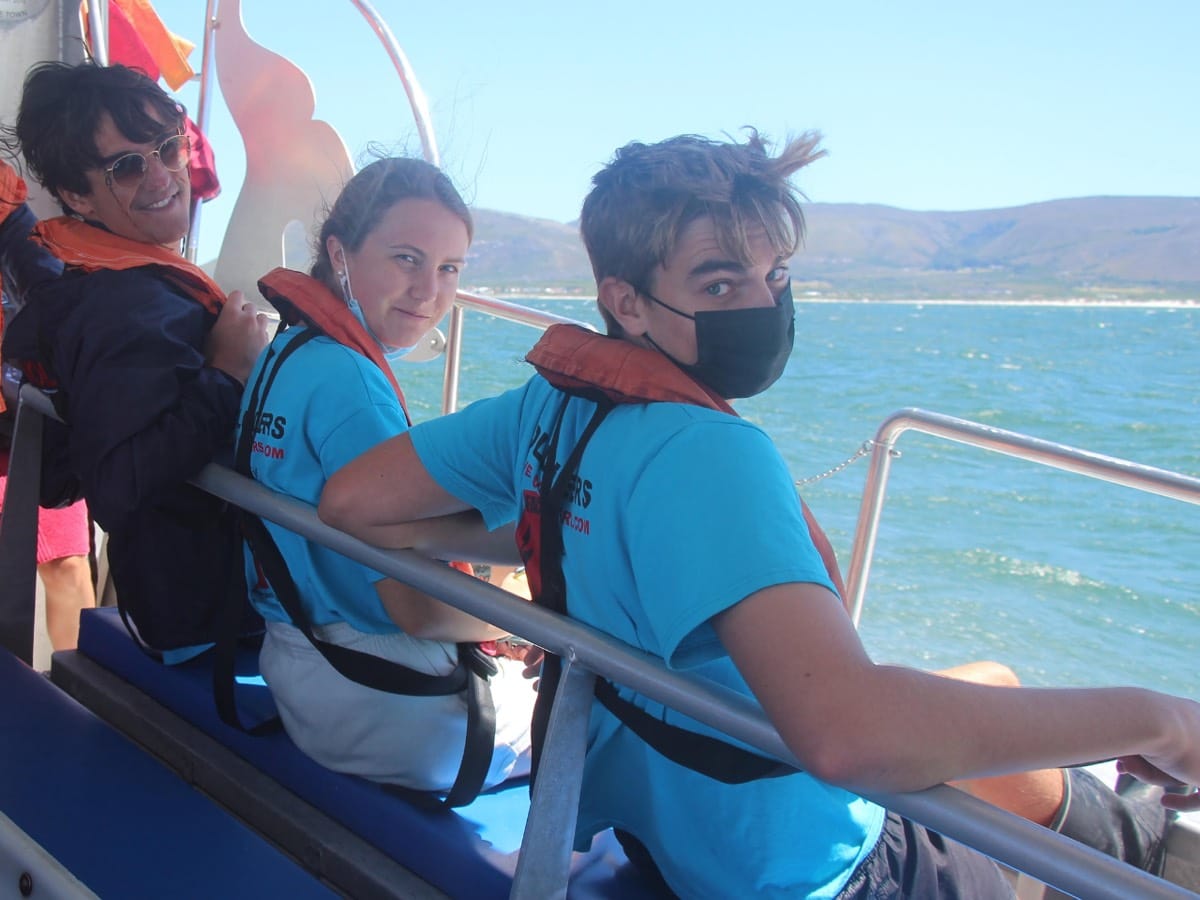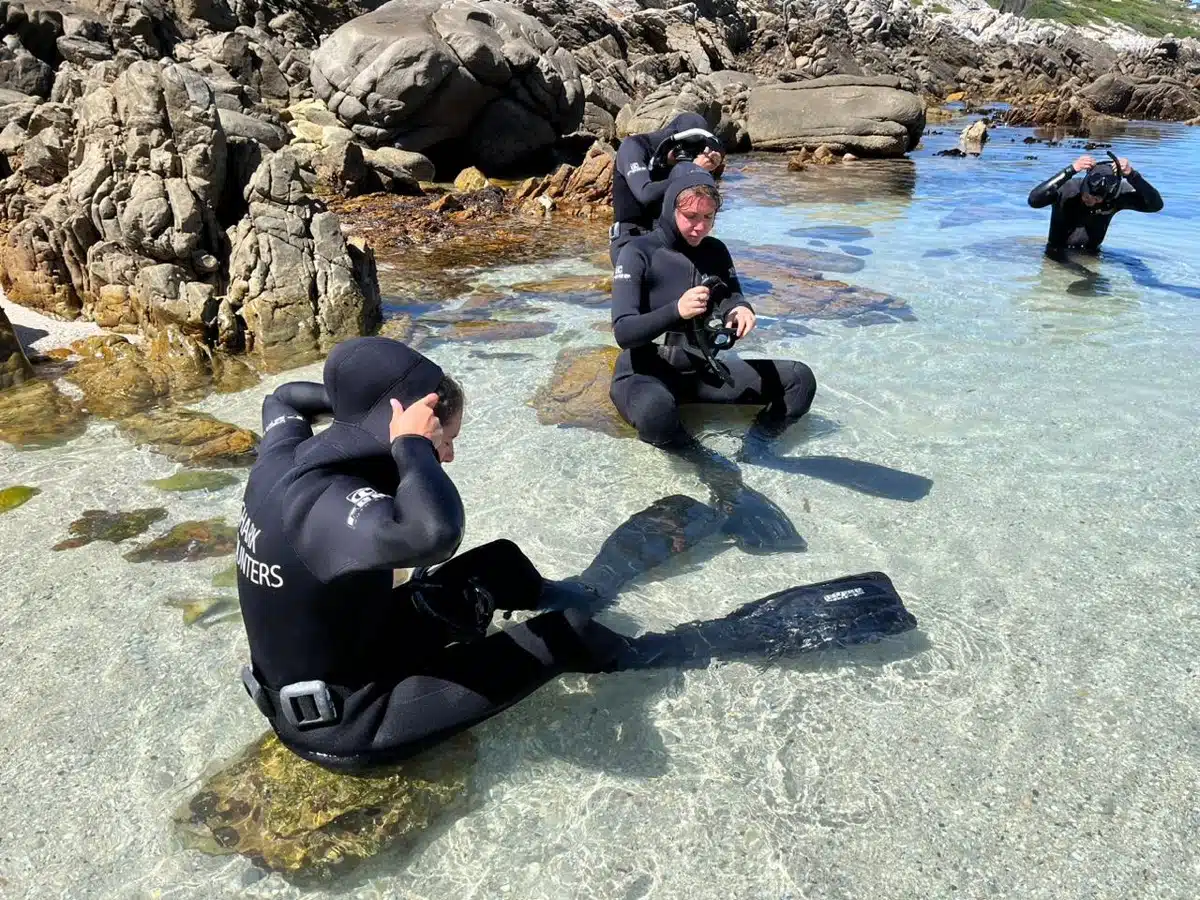



Along the rugged coastline of Gansbaai, one of the most biologically rich marine ecosystems unfolds just offshore. Known as the home of the Marine Big 5 – sharks, whales, dolphins, seals and African penguins, this stretch of ocean provides an opportunity to work alongside marine biologists and conservation teams protecting South Africa’s marine life. As a volunteer, you’ll assist with real research and conservation initiatives supporting the Dyer Island ecosystem, collecting data on marine species, supporting seabird rehabilitation and contributing to long-term environmental monitoring. Working both at sea and on land, you’ll gain hands-on experience in marine conservation.

Shark & Marine Conservation in South Africa
VOLUNTEER
CONSERVATION

Marine Research on South Africa’s Wild Coast
Project highlights
-
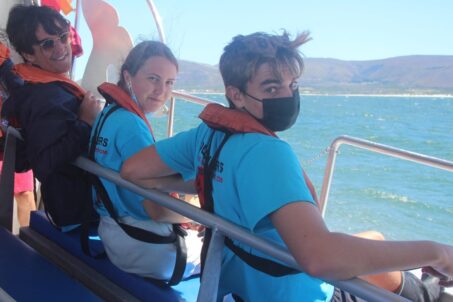
Spend your days out at sea
On research boat tours to monitor whales, sharks, dolphins and other marine life.
-
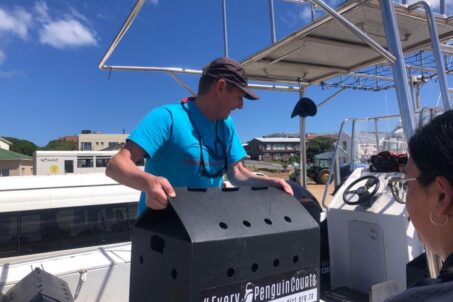
Support penguin conservation
Assist with feeding and care at the African Penguin and Seabird Sanctuary.
-
Learn real marine research skills
Through monitoring marine species, data collection, and environmental surveys.
-
Work in the Marine Big 5 ecosystem
In one of the most biologically rich marine regions in southern Africa.

Gansbaai, South Africa

Available: Year Round

Duration: 2 Weeks+

Price From £1,240 This cost covers your accommodation, meals, project fees, transfers, 24/7 support and in-country orientation.



What You’ll Do as a Great White Shark & Marine Conservation Volunteer
This project blends marine fieldwork, conservation action, and wildlife education. You’ll work alongside marine scientists and conservation teams, helping collect valuable research data while learning how ocean conservation is implemented on the ground.
CONSERVATION
Marine Wildlife Monitoring & Boat-Based Research
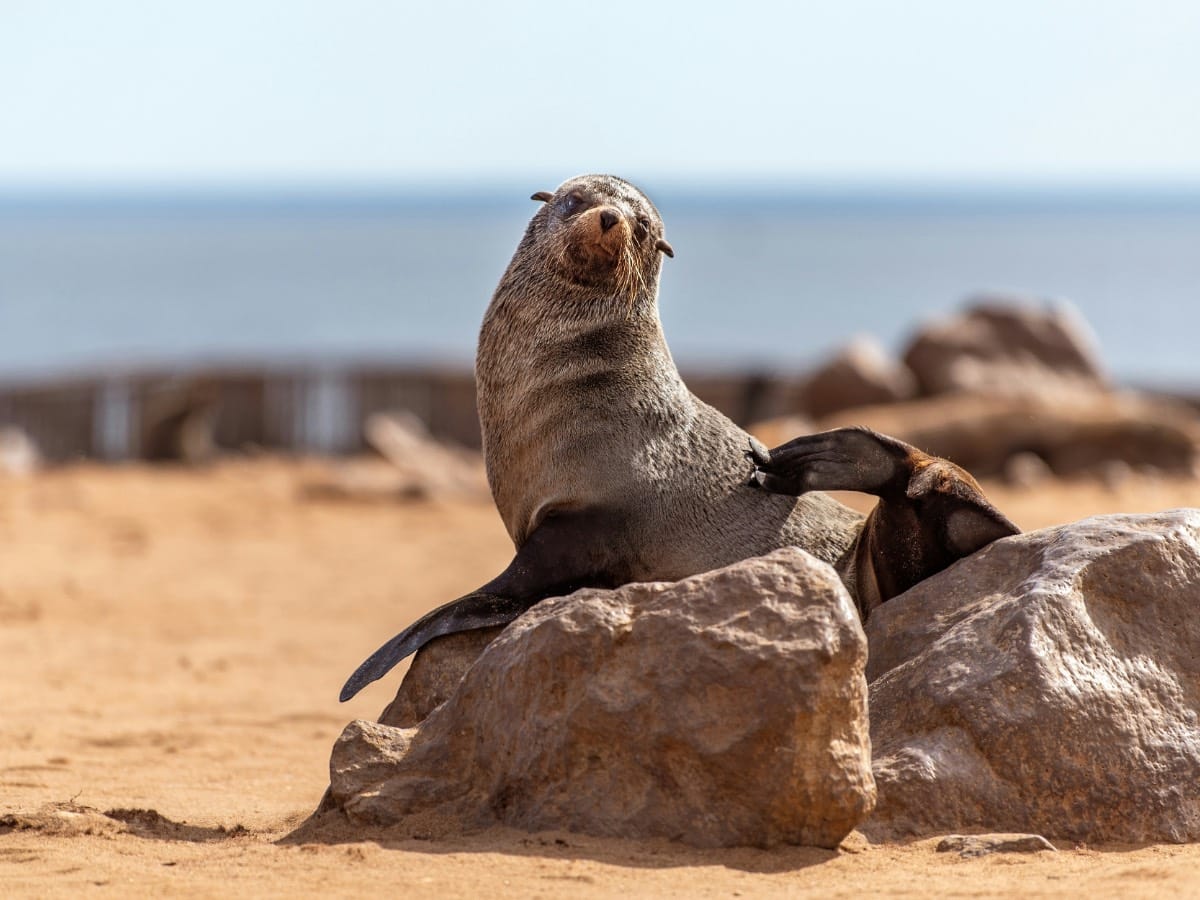
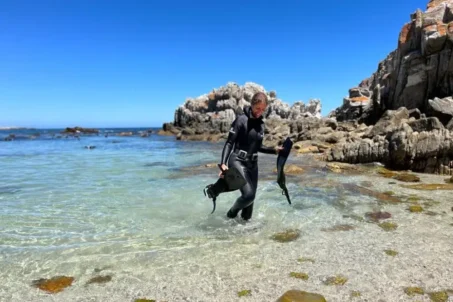
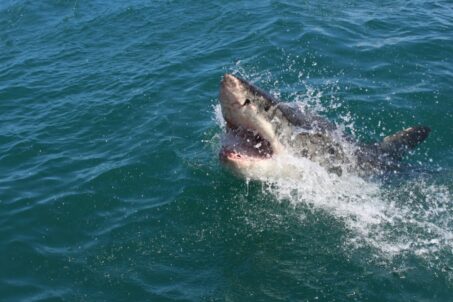
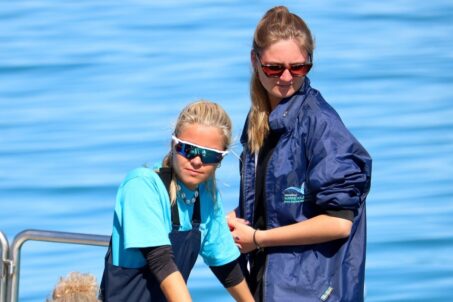
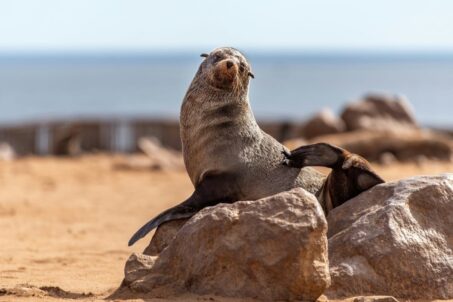
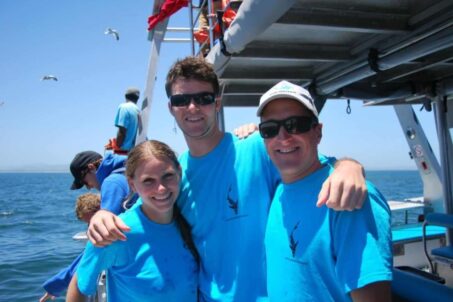
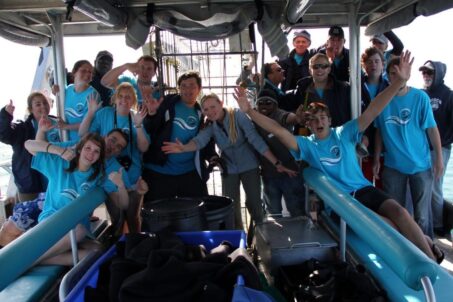
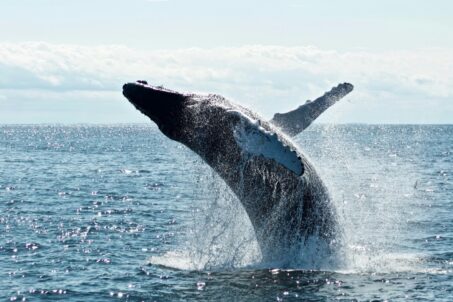
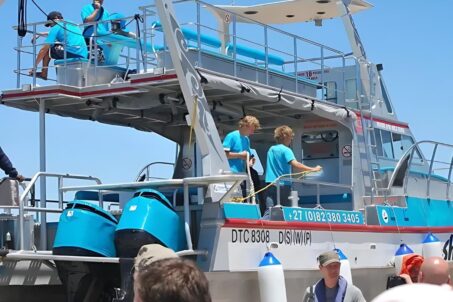
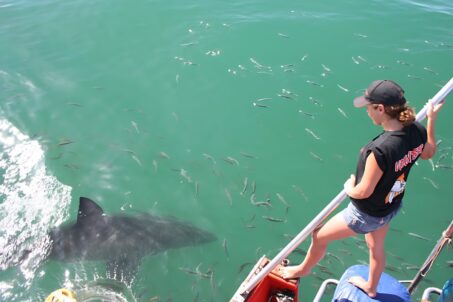
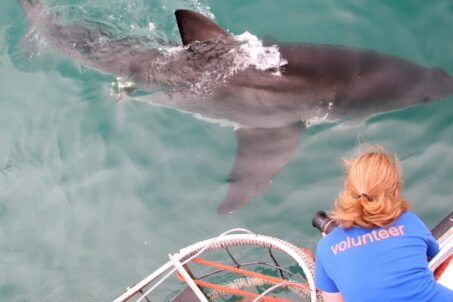
Many mornings begin out on the water. You’ll join research and eco-tour vessels heading into the nutrient-rich waters around Dyer Island. Working alongside marine guides and researchers, you’ll assist with wildlife observation and data recording. This may include identifying species, logging sightings, documenting behaviour, and helping capture photographic identification images used in population monitoring. Depending on the season, you may encounter southern right whales migrating through the bay, pods of dolphins moving along the coast, Cape fur seals gathering on Geyser Rock, or sharks patrolling the surrounding waters.

U.N. SUSTAINABLE DEVELOPMENT GOALS
Life Below Water | Life on Land
Life Below Water | Life on Land
CONSERVATION
Seabird Rehabilitation & Penguin Conservation
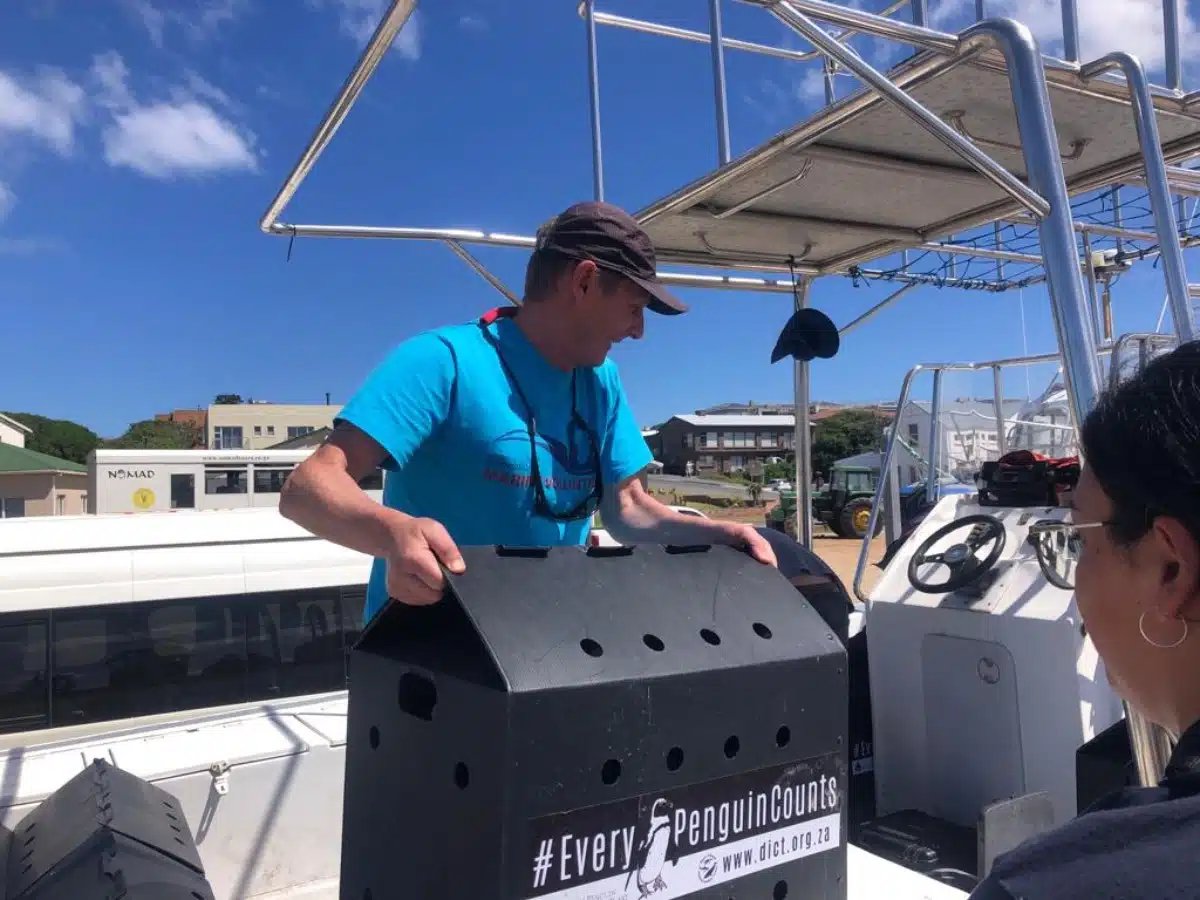
A key part of the project takes place at the African Penguin and Seabird Sanctuary, where injured, oiled, or sick seabirds are rehabilitated before being released back into the wild.Here you’ll assist with daily operations including fish preparation, feeding sessions, enclosure maintenance, and general sanctuary support. You’ll learn about seabird ecology, the threats facing African penguin populations, and the conservation strategies being used to protect this endangered species. Working closely with the sanctuary team offers a rare behind-the-scenes perspective on wildlife rehabilitation and marine conservation in action.
U.N. SUSTAINABLE DEVELOPMENT GOALS
Life Below Water | Life on Land
Life Below Water | Life on Land
CONSERVATION
Marine Research & Data Collection
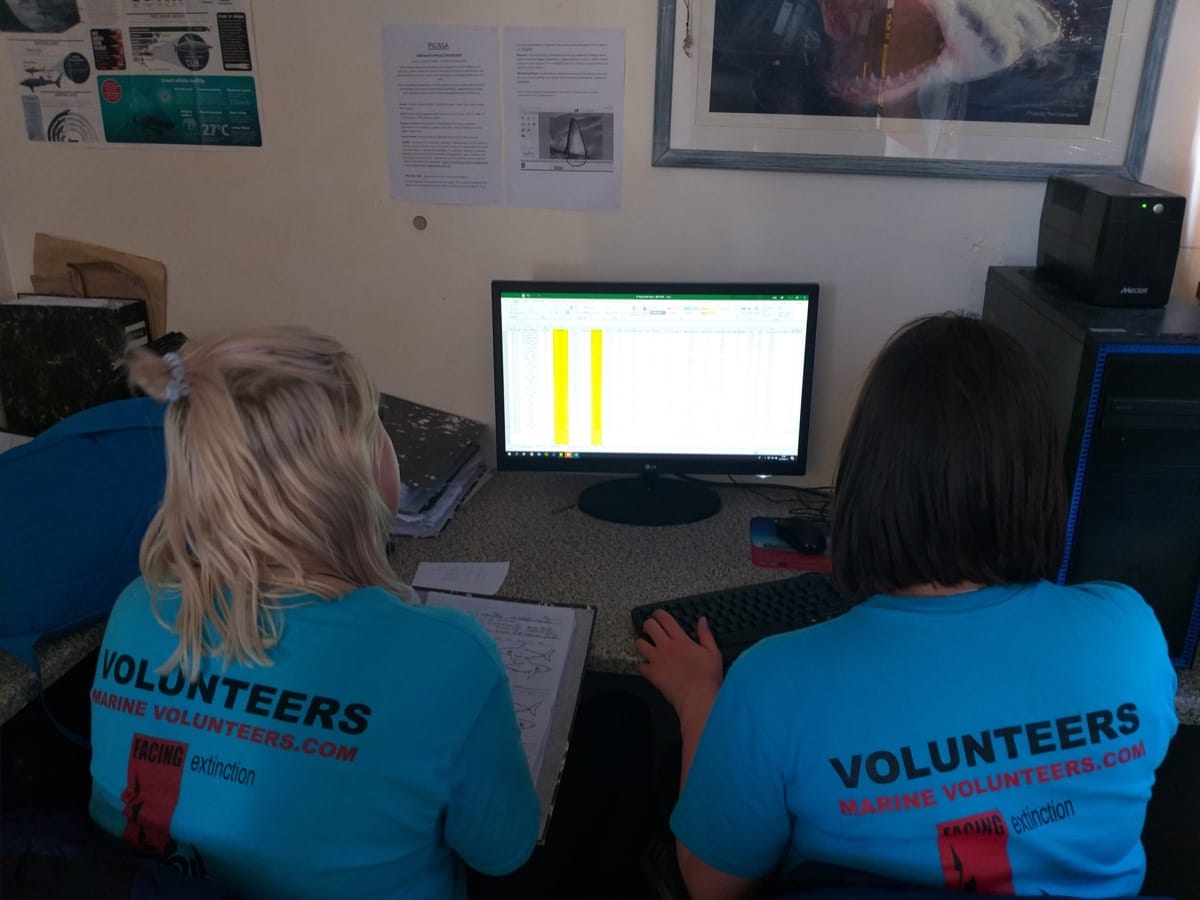
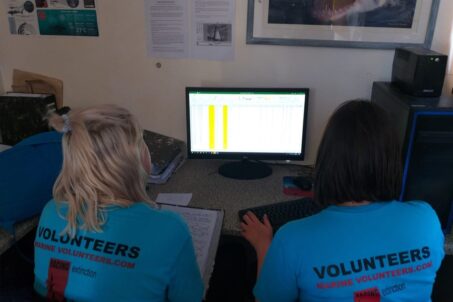
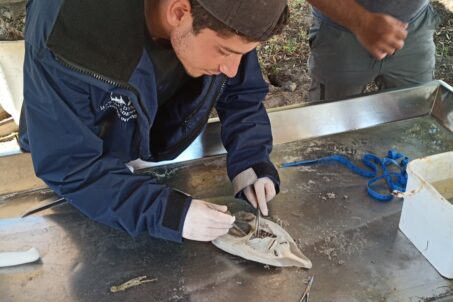
Beyond marine life sightings, volunteers contribute to a range of research initiatives aimed at better understanding marine ecosystems along South Africa’s coastline. During boat trips and fieldwork, you may help collect and log observational data, support biodiversity surveys, assist with photographic identification of marine species, and take part in projects such as shark egg case collection along nearby beaches. You’ll also record environmental observations that contribute to ongoing marine monitoring efforts. Back on land, you’ll help organise and log the day’s findings, turning field observations into structured data that researchers can analyse and use to inform conservation work.
U.N. SUSTAINABLE DEVELOPMENT GOALS
Life Below Water | Life on Land
Life Below Water | Life on Land
CONSERVATION
Marine Pollution & Coastal Conservation
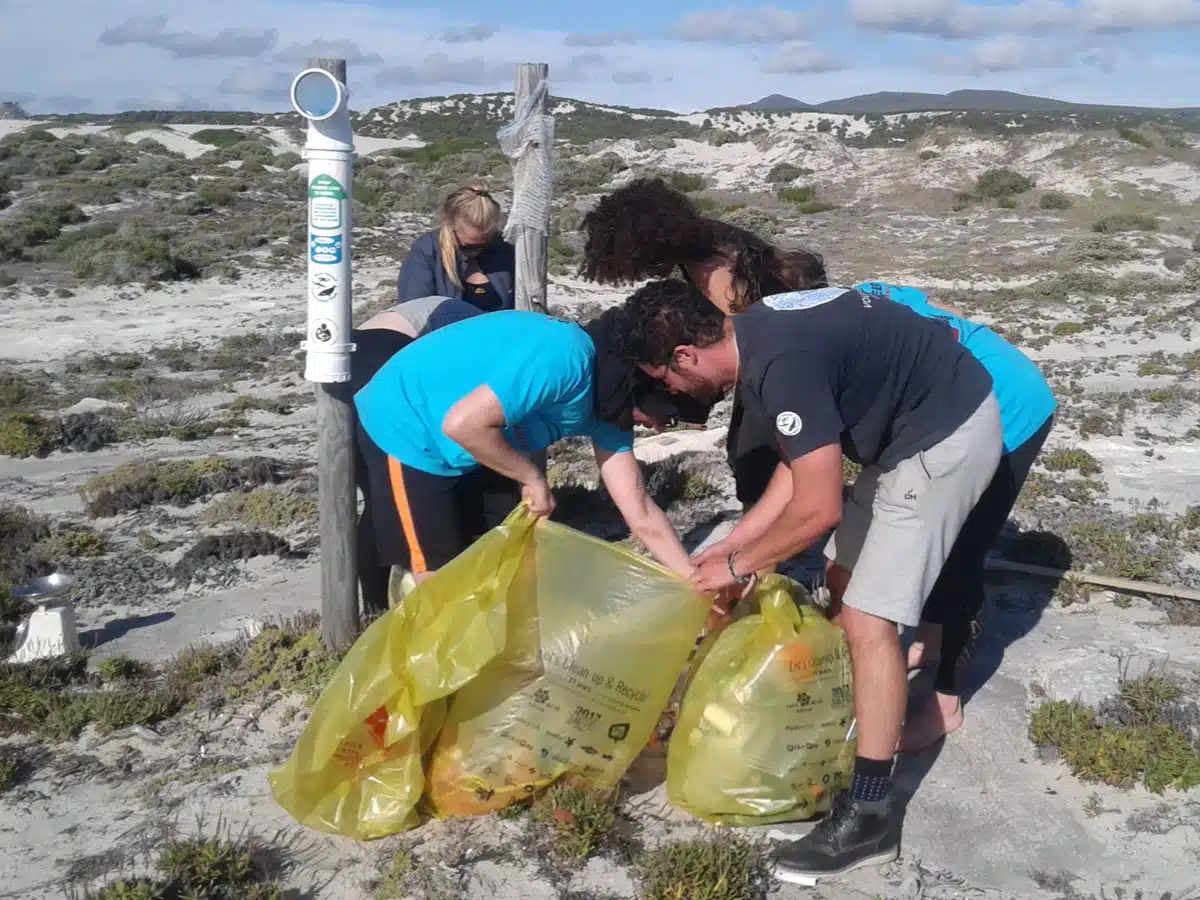
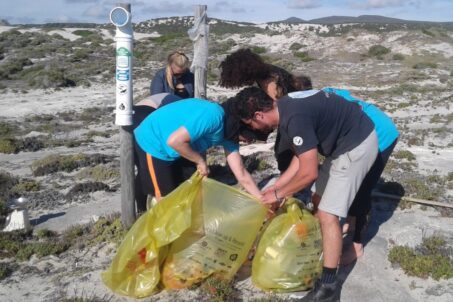
Healthy oceans depend on clean coastlines. Volunteers regularly take part in conservation initiatives designed to reduce pollution and protect marine habitats. You may assist with beach clean-ups, monitoring fishing-line recycling bins, or supporting other environmental initiatives aimed at reducing marine debris. These activities highlight the connection between coastal communities, tourism, and conservation, showing how small interventions can have a meaningful long-term impact on marine ecosystems.
U.N. SUSTAINABLE DEVELOPMENT GOALS
Life Below Water | Life on Land
Life Below Water | Life on Land
Project Location
Gansbaai, South Africa


Wild Coastline of the Western Cape
The project takes place in Gansbaai, a small coastal town about two hours from Cape Town. This region sits beside the globally significant Dyer Island ecosystem, where rich ocean currents support extraordinary marine biodiversity. Life here revolves around the ocean. Early mornings often begin with boat trips and wildlife sightings, while afternoons slow down with coastal walks, conservation discussions, or time spent relaxing with fellow volunteers.
On weekends or free days, volunteers often explore nearby attractions such as:
- Cape Agulhas, the southernmost point of Africa
- The Stony Point African penguin colony
- Coastal hiking trails and caves
- Wine farms and scenic Overberg towns
- Whale watching along the Cape coast (seasonal)
Accommodation
Your Volunteer Home in the Gansbaai Area


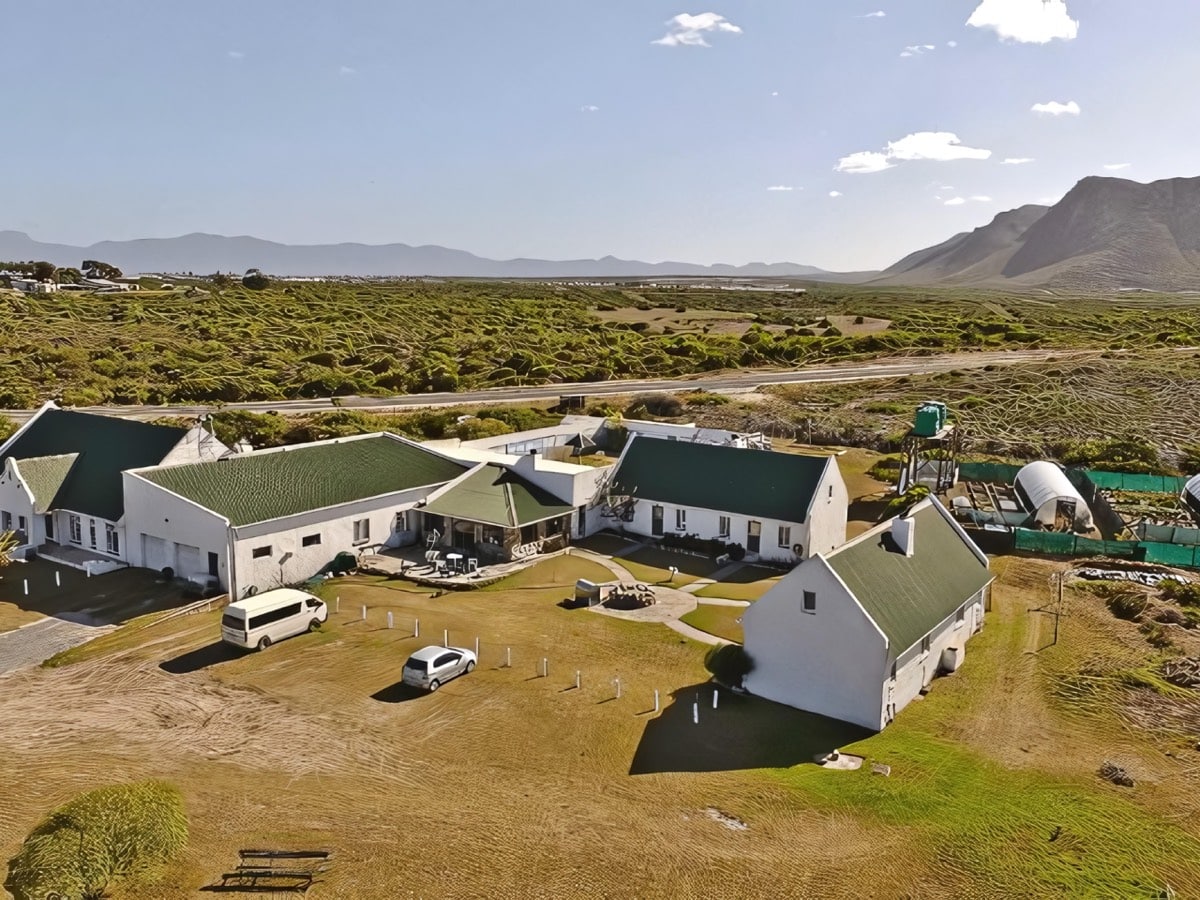
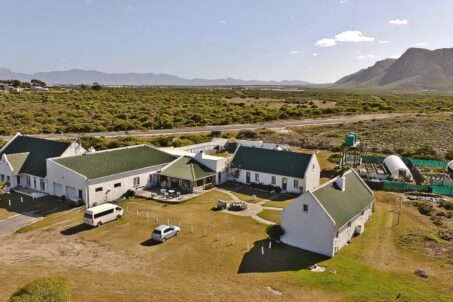
You’ll stay in shared accommodation at the Marine Volunteer Centre in Gansbaai, a comfortable base located close to the ocean and the conservation projects you’ll support. Rooms are shared with fellow volunteers and provide a relaxed, communal living environment that encourages connection and teamwork.
Bedding and linens are provided, and the centre includes communal kitchens, shared living spaces, and outdoor areas where volunteers often gather after project activities. The centre also includes study and meeting spaces used for conservation talks, training sessions, and project discussions.
Breakfast and lunch ingredients are provided during the week, allowing volunteers to prepare simple meals before heading out on project activities. Dinners are often shared experiences where volunteers cook together or visit local restaurants. Gansbaai has a relaxed coastal food scene, with plenty of opportunities to enjoy fresh seafood, local South African dishes, and casual seaside cafés.
You’ll be supported by an experienced team of marine biologists, guides, and programme coordinators who oversee daily activities, research initiatives, and volunteer training. They provide orientation when you arrive, guide fieldwork activities, and share their knowledge about the region’s marine ecosystems. The team also ensures all research and conservation activities align with ongoing scientific and environmental initiatives in the area.
Wi-Fi is available at the accommodation, although speeds may vary depending on weather and local infrastructure. Many volunteers also choose to purchase a local SIM card for mobile data during their stay. Occasional power interruptions can occur, which is part of everyday life in some parts of South Africa, but backup systems are often available at the volunteer centre.
Volunteer safety is a top priority. On arrival you’ll receive a full orientation covering marine safety, wildlife interaction guidelines, and emergency procedures. Boat trips are led by experienced skippers and marine guides, and all activities follow strict safety protocols. Staff are trained in first aid and emergency response, and support is available throughout your stay if needed.
Accommodation
You’ll stay in shared accommodation at the Marine Volunteer Centre in Gansbaai, a comfortable base located close to the ocean and the conservation projects you’ll support. Rooms are shared with fellow volunteers and provide a relaxed, communal living environment that encourages connection and teamwork.
Bedding and linens are provided, and the centre includes communal kitchens, shared living spaces, and outdoor areas where volunteers often gather after project activities. The centre also includes study and meeting spaces used for conservation talks, training sessions, and project discussions.
The Meals
Breakfast and lunch ingredients are provided during the week, allowing volunteers to prepare simple meals before heading out on project activities. Dinners are often shared experiences where volunteers cook together or visit local restaurants. Gansbaai has a relaxed coastal food scene, with plenty of opportunities to enjoy fresh seafood, local South African dishes, and casual seaside cafés.
Support Team
You’ll be supported by an experienced team of marine biologists, guides, and programme coordinators who oversee daily activities, research initiatives, and volunteer training. They provide orientation when you arrive, guide fieldwork activities, and share their knowledge about the region’s marine ecosystems. The team also ensures all research and conservation activities align with ongoing scientific and environmental initiatives in the area.
Safety
Volunteer safety is a top priority. On arrival you’ll receive a full orientation covering marine safety, wildlife interaction guidelines, and emergency procedures. Boat trips are led by experienced skippers and marine guides, and all activities follow strict safety protocols. Staff are trained in first aid and emergency response, and support is available throughout your stay if needed.
Connectivity
Wi-Fi is available at the accommodation, although speeds may vary depending on weather and local infrastructure. Many volunteers also choose to purchase a local SIM card for mobile data during their stay. Occasional power interruptions can occur, which is part of everyday life in some parts of South Africa, but backup systems are often available at the volunteer centre.
...the joy of making a real impact...
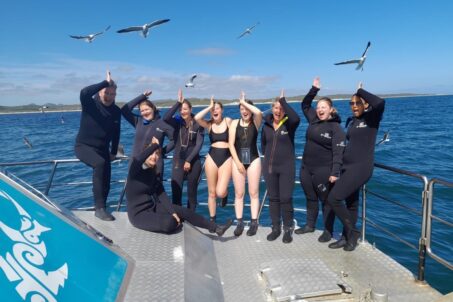
“I had such a great time, the boats are great to be on, everything is planned well. I love being on the ocean and this project offered that in so many different ways. I am positive that I learned a lot about not just the marine life of South Africa but also its conservation. It was amazing being able to see the Marine big five multiple times and having a great group of people (both the volunteers and crew) to share the experience with.”
Giulia S, The Netherlands
Pricing
Rates
| Duration | Program Fee |
|---|---|
| 2 weeks | $1,550 ($775 per week) |
| 3 weeks | $2,210 ($737 per week) |
| 4 weeks | $2,645 ($662 per week) |
| 5 weeks | $3,210 ($642 per week) |
| 6 weeks | $3,775 ($630 per week) |
| 8 weeks | $4,905 ($614 per week) |
| 10 weeks | $6,040 ($604 per week) |
| 12 weeks | $7,170 ($598 per week) |
| 2 weeks | £1,240 (£620 per week) |
| 3 weeks | £1,770 (£590 per week) |
| 4 weeks | £2,120 (£530 per week) |
| 5 weeks | £2,570 (£514 per week) |
| 6 weeks | £3,020 (£504 per week) |
| 8 weeks | £3,925 (£491 per week) |
| 10 weeks | £4,835 (£484 per week) |
| 12 weeks | £5,740 (£479 per week) |
| 2 weeks | €1,430 (€715 per week) |
| 3 weeks | €2,035 (€679 per week) |
| 4 weeks | €2,435 (€609 per week) |
| 5 weeks | €2,955 (€591 per week) |
| 6 weeks | €3,475 (€580 per week) |
| 8 weeks | €4,515 (€565 per week) |
| 10 weeks | €5,560 (€556 per week) |
| 12 weeks | €6,600 (€550 per week) |
| 2 weeks | $2,300 ($1,150 per week) |
| 3 weeks | $3,275 ($1,092 per week) |
| 4 weeks | $3,915 ($979 per week) |
| 5 weeks | $4,750 ($950 per week) |
| 6 weeks | $5,590 ($932 per week) |
| 8 weeks | $7,260 ($908 per week) |
| 10 weeks | $8,940 ($894 per week) |
| 12 weeks | $10,615 ($885 per week) |
Inclusions
- Cottage style accommodation with swimming pool
- Breakfast and lunch (Mon - Fri)
- Airport transfers on arrival and departure
- All project transport, equipment and resources
- Support from experienced local and international staff
- Full orientation for responsible project contribution
Exclusions
- Flights
- Visas
- Insurance
- Weekend tours
- Personal expenses
Requirements
- The minimum age to join this project is 18 years old
- The minimum stay for this project is 2 weeks
Award-winning Volunteer and Internship Projects Since 2004


Enquire now
Volunteering in Africa means travelling with purpose- joining meaningful community or conservation projects, where you pay to cover your stay and project costs, turning your trip into an immersive, impactful experience rather than a traditional holiday.
"*" indicates required fields
Project faqs
What Is The Best Time Of Year For Sharks?
There are some pros and cons to both seasons: Summer (Dec to Feb) is warm weather but we do struggle with visibility some of the time due to algal blooms in the water. The sharks spend time in the shallows during summer and we can see some big females this time of the year. By winter (June to August) they head out to the islands where they begin hunting more actively on the Cape fur seals of Geyser Rock. We have better visibility then, and believe it or not, slightly warmer water, but we also get some rough winter storms which can keep us off the sea.
What Kind Of Work Will I Be Doing On The Boats?
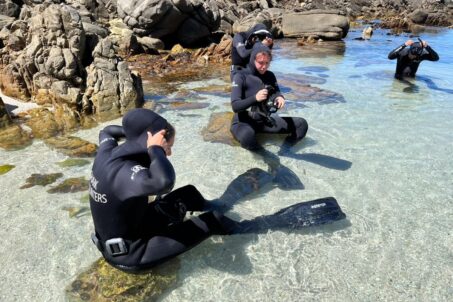
Assisting the crew in the dive operations, helping clients, data recording, observation, getting the boats ready before launch and helping operations when the boats return to land, which includes cleaning of wetsuits and preparing equipment for the next day. Some of the tasks can be quite physical so a healthy degree of fitness is required…. as are sea-legs!
How Often Will I Be Cage Diving?
On your first day, you will enjoy the cage diving experience as if you were a client so that you understand the experience. Thereafter you will slot in with the duties of the volunteers on board. As space and time allows, the skipper will let you know if you can get in the cage when we are hosting clients. And if we have been really busy and there has not been a chance for volunteers to dive we try to plan an exclusive trip just for the volunteers, again depending on weather/time etc.
Do I Need A Research Background To Make The Most Of This Project?
Absolutely not! Our qualified team of Field Guides will teach you everything you need to know about the area, it’s wildlife and associated conservation challenges. If you have a research background and are looking to complete your own project, you can view our Facilitated Wildlife Research Internship here.
Our favourite weekend activities in the Gansbaai Area, South Africa
The rugged and unspoilt landscape invites visitors to explore Gansbaai and its surrounds – from the white sands of Pearly Beach to horse riding trails and an array of marine based activities.