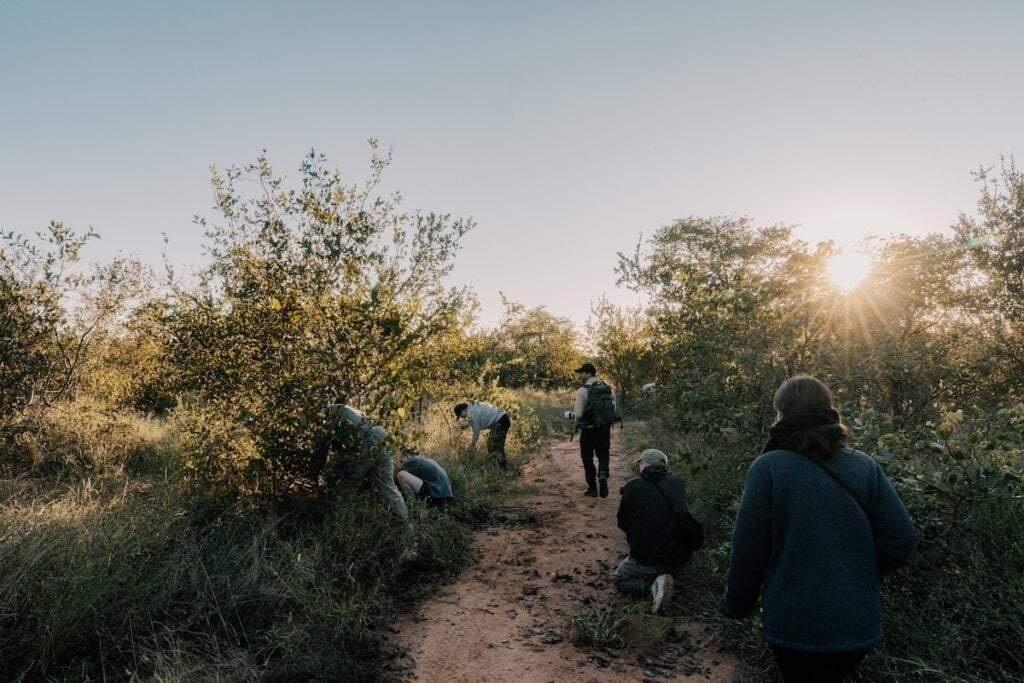
Faculty-led programs & study abroad
We offer exciting field programs for university students in an active conservation research environment.
From initial inquiry to field deployment
Initial Faculty Inquiry
Contact our academic partnerships team with your program objectives, cohort size, and preferred dates. We will respond within 48 hours with a tailored outline.
Program Development
We co-design the academic framework with your faculty — mapping field hours, assessment deliverables, and learning outcomes to your institution’s credit requirements.
Field Deployment
Your cohort is embedded into live research operations. All logistics, field supervision, and data processing are managed by our resident ecology team.
Program Structure
Student groups are integrated into ongoing research operations. Data collected by visiting cohorts is processed, validated, and submitted directly to Mthimkulu Reserve Management, contributing to the reserve’s adaptive management decisions.
Program duration, academic objectives, and assessment frameworks are developed in collaboration with partner faculty to meet institutional credit requirements.
Programs also include educational sessions and guest talks with conservation practitioners, researchers, and subject-matter experts, giving students the opportunity to connect their fieldwork with wider ecological and conservation perspectives.

Example Weekly Schedule
Students contribute to active research and conservation projects throughout their
program, with field activities scheduled according to project requirements and
seasonal opportunities. Depending on seasonal and research requirements:
Morning Sessions
06:00–12:00
Afternoon Sessions
Morning Sessions
06:00–12:00
Nine ecological disciplines
Students contribute to nine interconnected areas of ecological research and monitoring, and data collected contributes directly to ongoing reserve management and conservation planning.
Habitat & Vegetation Monitoring
Fixed-point quadrats, transects, canopy cover surveys, and biomass estimation tracking seasonal compositional change.
Elephant Ecology
Focal behavioral follows, browse pressure surveys, and monitoring of herd movement and ecosystem impact.
Carnivore Conservation
Monitoring of species demographics and distribution utilizing non-invasive methods including camera trap surveying and spoor tracking
Faculty Inquiry
We accept faculty-led group programs, independent research placements, and custom academic configurations year-round. Syllabi, field hour logs, and assessment documentation are available on request for institutional credit review.
"*" indicates required fields